
Spanish bank repossession property types: a UK buyer’s guide
Spanish bank repossessed properties fall into four main categories, and knowing which type you are looking at changes everything about the risk, the price, and the legal process you will face.
The four types are:
- Residential — apartments, terraced houses, and detached villas; the most common category and the one most UK buyers target
- Land and plots — urban building plots and rural land; often sold without planning guarantees
- Commercial premises and offices — street-front shops, office suites, and small commercial units
- Industrial units and warehouses — logistics and storage sites in industrial zones; more specialist territory for investors
These properties reach buyers through three main routes: bank asset managers and portals (primarily Solvia, Haya Real Estate, and Aliseda), the state-linked bad bank Sareb, and judicial auctions published on the BOE (Boletín Oficial del Estado) Portal de Subastas. Before you commit to any of them, order a nota simple from the Registro de la Propiedad, confirm whether the sale is “as seen,” and instruct an independent Spanish property lawyer. Property-lawyers can help you find a vetted, English-speaking solicitor for exactly this purpose.
Table of Contents
- 1. What are the four main types of repossessed assets in Spain?
- 2. Where are repossessed properties sold in Spain?
- 3. What condition and price should you realistically expect?
- 4. What legal checks must UK buyers carry out?
- 5. What are the biggest risks and red flags to watch for?
- 6. How should you inspect, value, and assess renovation costs?
- 7. What are the next steps for UK buyers?
- Key takeaways
- Why a Spanish property lawyer is your most important purchase
- Property-lawyers helps you find the right Spanish solicitor
- Useful sources
- FAQ
1. What are the four main types of repossessed assets in Spain?
Repossessed stock in Spain covers a wider range of asset classes than most UK buyers expect. Here is what each type typically looks like and where you are most likely to find it.
Residential properties are by far the largest share of the market. They include everything from one-bedroom apartments in coastal blocks to large detached villas on urbanisations. Coastal markets such as Marbella, Málaga, Palma de Mallorca, and Barcelona see the highest volume of residential repossessions, though the best units in these areas tend to sell quickly. Inland towns and secondary cities hold slower-moving stock, which often means more room to negotiate.
Land and plots come in two main forms: urban plots with existing planning permission and rural land with no guaranteed development rights. Urban plots in growing areas can represent genuine value, but rural land is higher risk. Banks rarely clarify planning status in the listing, so a buyer must verify this independently through the local town hall (ayuntamiento) and a Spanish lawyer.
Commercial premises include small shops, street-front units, and office suites, usually in town centres or commercial parks. Demand depends heavily on local footfall and the economic health of the area. A commercial unit in central Barcelona is a very different proposition from one in a quiet inland town.

Industrial units and warehouses are the most specialist category. They are found on the urban fringe and in designated industrial zones. These suit experienced investors rather than first-time buyers, and due diligence on planning use, access, and environmental status is particularly important.
Coastal holiday hotspots such as the Costa Brava and Costa Blanca carry a broad mix of apartments, villas, plots, and even parking spaces in repossession stock. The variety is real, but so is the competition from local buyers who move faster.
2. Where are repossessed properties sold in Spain?
Understanding the sales channel matters as much as understanding the property type. The channel determines your viewing rights, your negotiating position, and the legal complexity you face.
Bank portals and asset managers
The most accessible route for UK buyers is through bank-owned or servicer-managed portals. After a bank forecloses, it typically transfers the asset to a specialist servicer. The main names are Solvia (linked to Sabadell), Haya Real Estate, and Aliseda (linked to Santander). These platforms list REO (real estate owned) stock and operate as private sales, broadly similar to a standard Spanish property purchase. You can usually view the property, negotiate the price, and sign a reservation contract before proceeding to a notary for completion.
Sareb
Sareb is Spain’s state-linked asset management company, created to absorb toxic real estate from rescued banks. It holds a large portfolio of residential and land assets and sells through its own portal and through partner agents. Sareb sales follow a similar private sale process to bank portals, though the stock can vary widely in condition and location.
Judicial auctions via the BOE
The BOE Portal de Subastas publishes court-ordered sales, including repossessed properties where the borrower has not cooperated with the bank. These auctions can offer deeper discounts, but the trade-offs are significant: no guaranteed internal inspection, tight deposit and payment deadlines, and the real possibility that earlier-ranking charges survive the sale and transfer to you as the new owner.
| Sales channel | Viewing rights | Negotiation | Typical discount | Legal complexity | Completion timeline |
|---|---|---|---|---|---|
| Bank portal (Solvia, Haya, Aliseda) | Usually yes | Yes, often flexible | Moderate | Lower | Standard (weeks to months) |
| Sareb | Usually yes | Limited | Moderate | Lower | Standard |
| BOE judicial auction | Often no | No | Potentially higher | High | Tight deadlines |
For most UK buyers, the bank portal and Sareb routes are the more practical starting point. The BOE auction route rewards buyers who already have legal representation in place and cash or bridging finance ready.
3. What condition and price should you realistically expect?
The word “bargain” appears frequently in coverage of Spanish repossessions. The reality is more nuanced. Professional investors often cherry-pick the best stock before it reaches open portals, using local networks and preview sales. By the time a listing appears on a bank portal, the most attractive units may already be gone.
Properties are almost always sold “as seen.” Banks do not carry out repairs, clear outstanding debts, or update missing licences before selling. A property that has been vacant for several years may need new plumbing, electrical rewiring, kitchen and bathroom replacement, and structural repairs. Budget for this before you fall in love with the asking price.
In high-demand cities like Barcelona, repossessions sell quickly and discounts are often modest. Inland provinces and secondary towns tend to hold slower-moving stock where deeper price reductions are more realistic.
Costs to factor into your total budget beyond the purchase price:
- Renovation — can range from cosmetic work to a full structural refurbishment
- Unpaid community fees — banks typically do not clear these; you may inherit arrears
- IBI arrears — outstanding local council tax (Impuesto sobre Bienes Inmuebles) can attach to the property
- Utility reconnection — disconnected services may require new contracts and deposits
- Notary and land registry fees — standard transactional costs
- Transfer tax (ITP) or VAT and stamp duty (AJD) — depends on whether the property is a resale or new build
- Legal fees — non-negotiable for a safe purchase
A working rule is to set aside 10–15% of the purchase price for taxes and transaction costs, plus a separate renovation contingency.
4. What legal checks must UK buyers carry out?
Due diligence on a repossessed property follows the same broad steps as any Spanish purchase, but with additional layers of risk that make professional legal help genuinely important rather than optional.
The core checks are:
- Nota simple from the Registro de la Propiedad — this document shows the registered owner, the description of the property, and all recorded charges, mortgages, and embargoes. It is the starting point for any due diligence.
- Rank of charges — confirm whether the bank’s mortgage was the first-ranking charge. At judicial auctions, earlier-ranking charges can survive the sale and transfer to the buyer.
- Community fee arrears — request a certificate from the community of owners (comunidad de propietarios) confirming the current balance.
- IBI arrears — check with the local town hall for any outstanding council tax.
- Licence of first occupation — confirm the property has a valid cédula de habitabilidad or licencia de primera ocupación; missing licences can prevent you from connecting utilities or registering the property.
- Energy performance certificate — legally required for any sale; its absence is a red flag.
- Auction dossier — for BOE auctions, read the full dossier to understand surviving charges, occupation status, and payment obligations.
You can verify property debts in Spain through a combination of land registry searches, town hall enquiries, and community administrator certificates. A Spanish property lawyer can coordinate all of these on your behalf and interpret what they find.
Pro Tip: Always instruct your lawyer before making any offer or placing any auction bid. The checks above take time, and committing funds before they are complete is the single most common mistake UK buyers make.
5. What are the biggest risks and red flags to watch for?
Some listings carry risks that no amount of negotiation can offset. Knowing the warning signs early saves time and money.
- Vague legal status wording in the listing, such as “subject to charges” or “sold as is with no further information,” signals that the seller cannot or will not clarify the legal position.
- Refusal to allow an internal inspection is a serious red flag, particularly for bank sales where viewings are usually possible. For BOE auctions it is more common, but still worth noting.
- Missing energy certificate or licence of first occupation — both are legally required. Their absence may indicate an illegal build or an unresolved planning issue.
- Unusually low price with no explanation — sometimes reflects an occupancy problem, a serious structural defect, or a charge that will transfer to the buyer.
- Occupation by former owners, tenants, or okupas (squatters) — eviction proceedings in Spain can take many months and involve significant legal cost. Confirm occupation status before proceeding.
- Surviving earlier charges — at judicial auctions, charges that predate the enforcement may not be extinguished by the sale. Your lawyer must confirm the rank of every recorded charge.
If the sale dossier cannot establish that senior charges will be cleared, or if the expected possession timeline exceeds your financial plan, the sensible course is to walk away. There will be other properties.
6. How should you inspect, value, and assess renovation costs?
Online photographs of repossessed properties are often taken years before the sale and rarely reflect the current condition. An in-person visit is the only reliable way to assess what you are buying.
- Request an internal viewing through the bank portal or asset manager. Most bank REO sales allow this; BOE auctions often do not.
- Photograph and document everything — walls, ceilings, floors, electrics, plumbing, roof access where possible, and the condition of communal areas if it is an apartment.
- Ask about service connections — confirm whether electricity, water, and gas are connected and whether meters are active.
- Commission a technical survey from a qualified arquitecto técnico (technical architect) or aparejador (building surveyor). This is the Spanish equivalent of a structural survey and will identify defects that photographs miss.
- Get a builder’s quote before finalising your offer. A survey tells you what is wrong; a quote tells you what it will cost to fix.
- Compare against recent sold prices in the same street or urbanisation, adjusting for renovation cost and legal uncertainty. Bank asking prices are not always below market value once you add the full cost of purchase.
Pro Tip: If you are buying remotely, grant a trusted Spanish lawyer or agent a power of attorney to attend viewings, collect documents, and act on your behalf. This is a standard and legally straightforward arrangement in Spain.
7. What are the next steps for UK buyers?
A clear sequence reduces the risk of costly mistakes. Here is a practical checklist from first interest to completion.
- Get your NIE (Número de Identificación de Extranjero) — you cannot buy property in Spain without one. Apply at a Spanish consulate in the UK or in person at a Spanish police station.
- Open a Spanish bank account — needed for tax payments, utility contracts, and mortgage applications.
- Instruct a Spanish property lawyer before any offer or bid. Ask them to check the nota simple, tax arrears, community debts, and auction conditions. Property-lawyers lists vetted, English-speaking solicitors across Spain’s main regions.
- Arrange finance — banks selling repossessed stock can offer mortgages on their own REO properties, sometimes with competitive terms. For BOE auctions, cash or pre-arranged bridging finance is often necessary given the tight payment deadlines.
- Prepare source-of-funds documentation — banks and servicers require detailed proof of where your money comes from, including bank statements, tax returns, and records of any currency transfers.
- Complete the inspection and survey as described above.
- Receive your lawyer’s report covering title, charges, debts, and any legal risks.
- Make your offer or place your bid — for bank sales, this leads to a reservation contract (contrato de arras) and then a private purchase contract before notary completion. For auctions, the process moves faster and the deposit is lodged with the court.
- Complete at the notary and register the title at the Registro de la Propiedad.
For the full Spanish property purchase process, including timelines and document checklists, Property-lawyers has a dedicated step-by-step guide.
Key takeaways
Repossession purchases still require local due diligence on title, planning and occupation. If the property is in a major international-buyer market, review local legal support in Mallorca, Marbella, Madrid, Barcelona or Ibiza.
Spanish bank repossessions span four distinct asset types, each sold through channels that carry different legal risks and timelines — and every purchase requires a nota simple check and independent legal advice before any money changes hands.
| Point | Details |
|---|---|
| Four property types | Residential, land/plots, commercial, and industrial — each has a different risk and demand profile. |
| Sales channel matters | Bank portals (Solvia, Haya, Aliseda, Sareb) are lower risk than BOE judicial auctions but may offer smaller discounts. |
| Budget 10–15% on top | Set aside 10–15% of the purchase price for taxes, notary, and registration, plus a separate renovation contingency. |
| Legal checks are non-negotiable | Always obtain a nota simple, verify outstanding debts, and commission a technical survey before committing. |
| Use Property-lawyers | Property-lawyers connects UK buyers with vetted, English-speaking Spanish property lawyers who can carry out all due diligence checks. |
Why a Spanish property lawyer is your most important purchase
The paperwork around a repossessed property in Spain is not complicated in the way that tax law is complicated. It is complicated in the way that a minefield is complicated: most of the ground is safe, but the dangerous spots are invisible until you step on them.
A good Spanish property lawyer does not just read documents. They know what is missing. They spot a charge ranked above the bank’s mortgage that will survive the auction and transfer to you. They notice that the community fees certificate is three months old and ask for a current one. They flag that the licence of first occupation was never issued and explain what that means for your ability to rent the property legally.
For UK buyers, there is an additional layer: the entire process happens in Spanish, under Spanish law, with Spanish institutions that do not always respond quickly to foreign enquiries. A lawyer who speaks English and knows the local market removes that friction entirely. They can attend auctions on your behalf, manage the notaría appointment, handle post-purchase registration, and advise on the tax implications of any future resale. That is not a luxury. For a repossessed property, where the risks are higher than a standard purchase, it is the difference between a good investment and an expensive lesson.
Property-lawyers helps you find the right Spanish solicitor
Buying a repossessed property in Spain from the UK means navigating a process that moves quickly, involves unfamiliar institutions, and carries legal risks that are genuinely hard to spot without local expertise. Property-lawyers is Spain’s leading directory of vetted, independent, English-speaking property lawyers, with solicitors listed across every major region including Málaga, Marbella, Barcelona, and Mallorca.
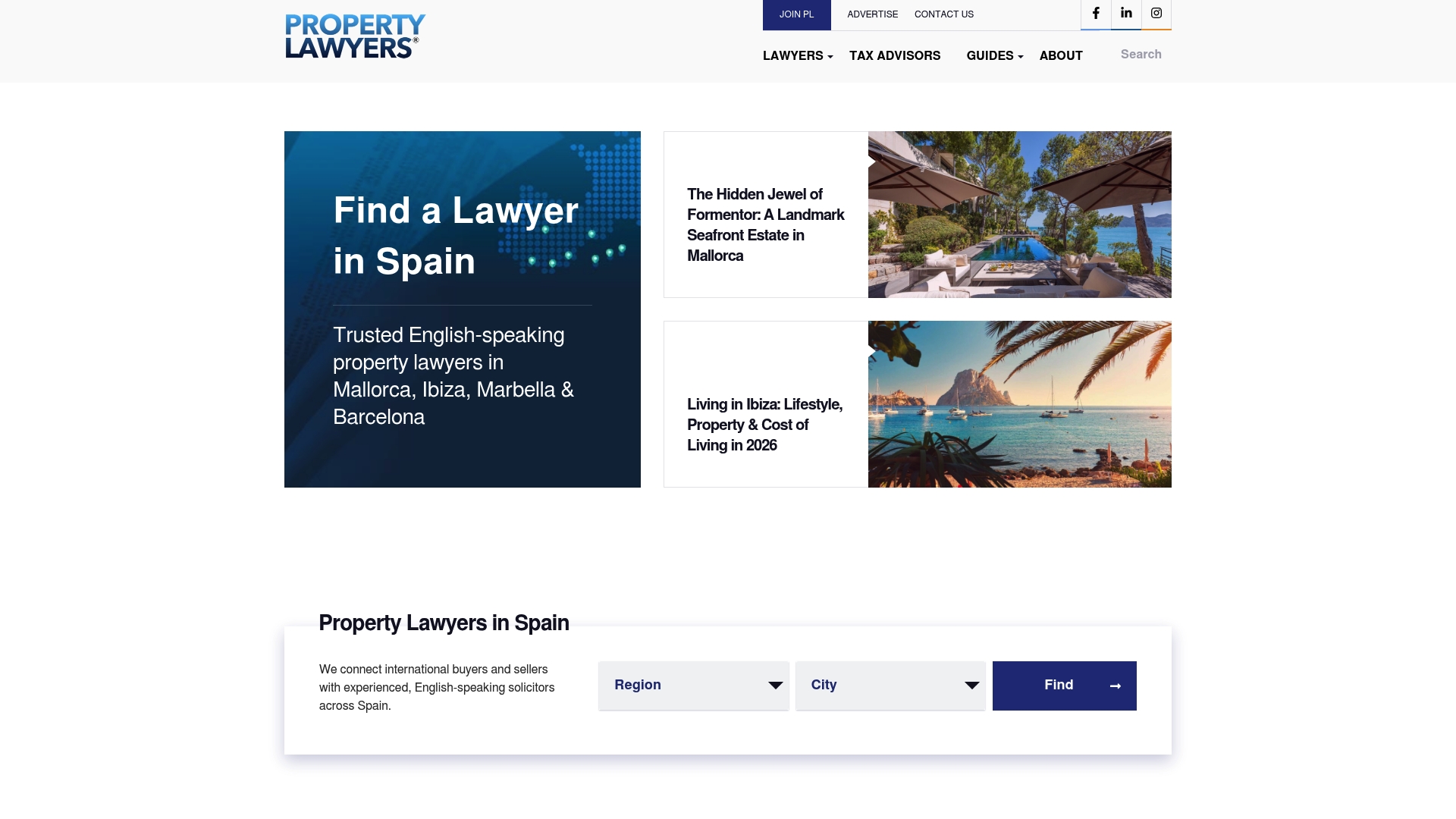
The lawyers listed on Property-lawyers can carry out nota simple checks, attend BOE auctions on your behalf, run occupation and eviction procedures, and advise on property purchase tax in Spain and post-purchase registration. If you are planning to let the property after purchase, they can also guide you on rental licence requirements and compliance. Browse the regional pages on Property-lawyers to find a matched solicitor and take the first concrete step towards a legally secure purchase.
Useful sources
- BOE Portal de Subastas — the official government portal where all judicial and administrative property auctions in Spain are published
- Sareb — Spain’s state-linked asset management company; holds and sells a large portfolio of repossessed residential and land assets
- Solvia — bank servicer and asset manager for repossessed property portfolios
- Haya Real Estate — one of Spain’s largest servicers of bank-owned property
- Aliseda — Santander-linked asset manager for REO stock
- Registro de la Propiedad — Spain’s land registry; use it to order a nota simple and verify title and charges on any property
- Property-lawyers due diligence guide — a practical checklist for UK buyers covering all legal steps from search to completion
FAQ
What is a Spanish bank repossession?
A Spanish bank repossession occurs when a borrower defaults on a mortgage and the bank takes ownership of the property through a court process. The bank then sells the asset, either through its own portal or via a judicial auction.
Can UK buyers purchase repossessed properties in Spain?
Yes. There are no restrictions preventing UK nationals from buying repossessed property in Spain. You will need a NIE number, a Spanish bank account, and proof of the source of your funds.
What are the main types of repossessed properties in Spain?
The main types are residential (apartments, houses, villas), land and plots, commercial premises, and industrial units. Residential properties are the most common and the most accessible for private buyers.
Is buying at a BOE judicial auction riskier than buying from a bank portal?
Generally yes. BOE auctions often allow no internal inspection, require a deposit and rapid payment, and carry a risk that earlier-ranking charges survive and transfer to the buyer. Bank portal sales follow a more standard private sale process with more time for due diligence.
What costs should I budget for beyond the purchase price?
Budget a percentage of the purchase price for transfer tax (ITP) or VAT and stamp duty (AJD), notary fees, land registry fees, and legal costs. Add a separate renovation contingency and check for unpaid community fees and IBI arrears before completing.
This article provides general information for UK buyers researching Spanish property. It is not legal or financial advice. Always confirm current rules and your specific position with a qualified Spanish property lawyer before proceeding.
Recommended
- Property law in Spain: a 2026 guide for buyers
- Gazumping in Spain: what property buyers must know
- How to verify property debts in Spain: a buyer’s guide

Sophie Gutenberg is a legal content specialist focused on Spanish property law, real estate transactions, conveyancing, due diligence and tax issues affecting international property buyers in Spain. She works alongside qualified Spanish property lawyers .
