

50–70% LTV: Non Resident Spanish Mortgages and When to Hire a Lawyer
Yes, non-residents can get a mortgage in Spain, but the terms are noticeably tighter than what a Spanish resident would be offered. Expect a loan covering roughly 50% to 70% of the property’s value, a larger deposit than you might have budgeted for, and a documentation process that rewards early preparation. Get your NIE sorted and your paperwork translated before you fall in love with a villa in Marbella or an apartment in Palma.
TL;DR:
- Non-residents in Spain can expect to receive loans covering only 50% to 70% of property value, requiring a deposit of 30% to 50%.
- Key documents include a NIE or passport, proof of income, tax residency, recent bank statements, and source-of-funds proof, often needing translation and apostillation.
- The mortgage process takes roughly six to ten weeks, with delays caused by missing paperwork or translations, and involves property valuation and notarization.
- Choosing a lender or broker carefully is crucial, as most offer more conservative terms than for residents, and cross-border enforcement is more complex.
- Hiring a Spanish property lawyer early streamlines due diligence, verifies property legal status, and ensures the lender’s documentation holds up before submitting a mortgage application.
Table of Contents
- Quick checklist: the documents and financial requirements you must have ready
- Step-by-step application process and realistic timelines
- Documentation: the exact papers lenders will ask for
- Typical terms and costs: LTV, term limits, and transaction fees
- Who lends to non-residents and how to choose the right route
- Why hire a Spanish property lawyer
- What the mortgage process for non-residents actually rewards
- If you’d rather have the legal side handled properly
- Sources
- FAQ
Quick checklist: the documents and financial requirements you must have ready
Before you contact a Spanish bank or broker, gather the basics so you are not scrambling later. Lenders want to see who you are, what you earn, and where your money comes from.
- NIE (Número de Identidad de Extranjero) or a valid passport as your identification starting point
- Tax residency certificate from your home country, showing where you actually pay tax
- Proof of income: payslips, tax returns, or accountant-verified earnings if self-employed
- Recent bank statements, typically the last three to six months
- Source-of-funds documentation for your deposit, especially for larger sums
- A credit history report from your home country, translated if it is not in Spanish
Pro Tip: Open a Spanish bank account before you formally apply. Many banks now offer remote account opening for non-residents, and having a local account already in place speeds up every stage that follows.
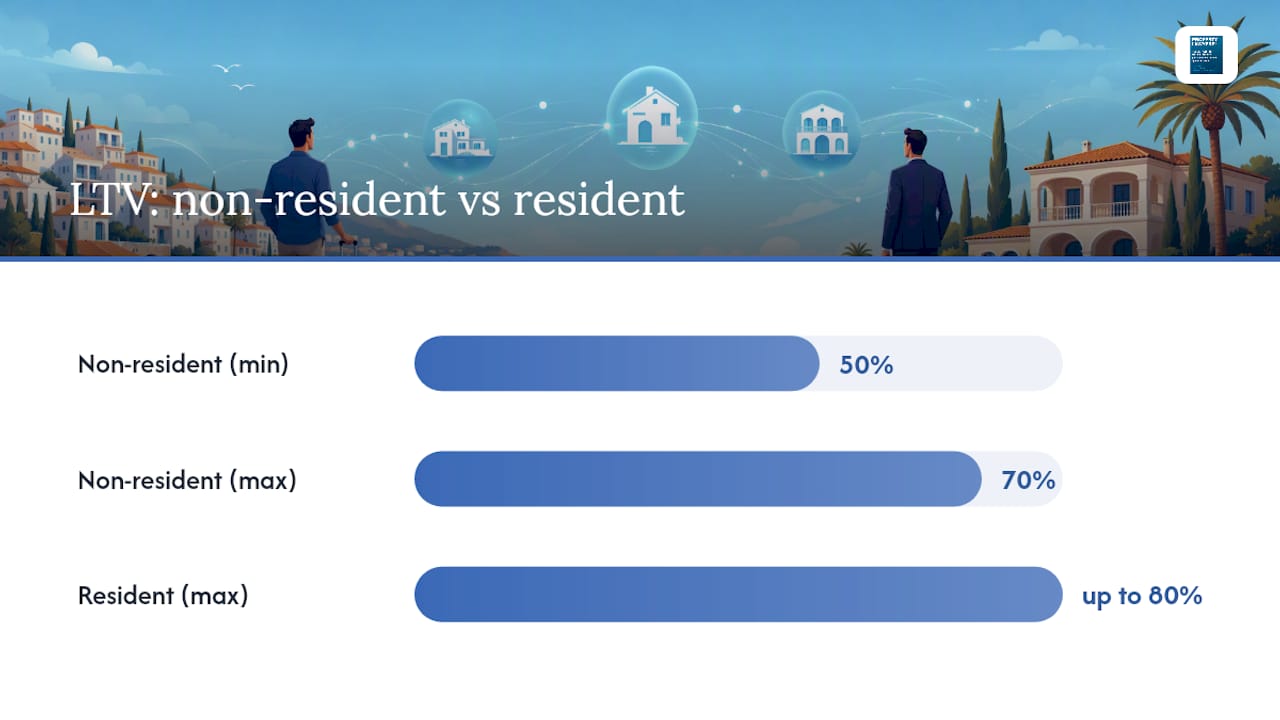
Non-resident financing commonly ranges between 50% and 70% loan-to-value, compared with up to 80% for Spanish residents. That gap is the single biggest number to plan around.
Step-by-step application process and realistic timelines
The mortgage process for non-residents follows a fairly predictable sequence, though each stage can stretch if paperwork is missing.
- Initial feasibility check. A broker or bank’s international desk reviews your income, existing debts, and deposit to give an early view of what you could borrow. This usually takes a few days once you have supplied basic financial documents.
- Property valuation. The bank commissions an independent valuation, which directly shapes the final loan-to-value offer. A low valuation relative to the purchase price is one of the most common reasons deals stall.
- Pre-approval and the FEIN. Once satisfied, the lender issues a Ficha Europea de Información Normalizada (FEIN), the standardised binding mortgage offer, alongside the FIPRE (preliminary information) issued earlier in the process. These documents set out the rate, term, and conditions in writing.
- Notary signing and completion. By law, there is a minimum ten-day reflection period between receiving the FEIN and signing at the notary. Completion then follows, usually within a few weeks of that signing.
Realistically, allow between six and ten weeks from first enquiry to completion, longer if translations or valuations are delayed. Banks and brokers increasingly offer remote feasibility checks, which can cut out an early trip to Spain, but the notary signing itself still requires either your presence or a power of attorney arranged through your lawyer.
Documentation: the exact papers lenders will ask for
Spanish banks work from a fairly fixed list of documents, and missing one item is the most common cause of delay for foreign applicants.
- Passport and NIE, the two identity documents every application starts with
- Certificate of tax residency or non-residence, confirming your tax status abroad
- Three latest payslips or your last full tax return, plus recent bank statements
- An asset register if you hold savings, investments, or other property that supports the application
- Nota simple registral for the property, confirming ownership and any charges against it
- The reservation or arras contract, and the valuation report once the bank has commissioned it
Non-resident applicants often need documents translated by a sworn translator (traductor jurado) and sometimes apostilled, and these costs are normally paid by the applicant. Sworn translation fees vary by document length and language pair, so ask your lawyer or the bank for an estimate early rather than after you have already submitted a file.
Typical terms and costs: LTV, term limits, and transaction fees
Loan-to-value is the number that shapes everything else in your budget. Most non-residents are offered between 50% and 70%, meaning a deposit of 30% to 50% of the purchase price, well above the 10% to 20% many resident buyers put down.
- Maximum loan term: typically shorter than resident offers, often capped at less than the maximum term sometimes available to Spanish taxpayers.
- Interest rates: usually carry a small premium over resident rates, and if your income is not in euros, currency swings can quietly change your real borrowing cost over the life of the loan
- ITP or IVA (transfer tax or VAT, depending on whether the property is resale or new build)
- AJD (stamp duty on the mortgage deed itself)
- Notary and land registry fees
- Gestoría fees for administrative processing
- Valuation and translation costs
Practical checklists suggest taxes and fees together commonly add 10% to 15% on top of the purchase price, varying by autonomous community and whether the property is new or resale. Combine that with your deposit, and a sensible rule of thumb is to have 40% to 65% of the purchase price available in cash before you start seriously viewing properties in Ibiza, Málaga, or Barcelona.
Who lends to non-residents and how to choose the right route
Several types of lender operate in the non-resident space, and picking the wrong one costs time you did not budget for.
- National retail banks with dedicated international desks, often the most straightforward starting point for English-speaking buyers
- Regional and savings banks, sometimes more flexible on regional property types but less used to foreign paperwork
- Specialist mortgage brokers, who compare offers across several lenders and manage the document flow on your behalf
- Authorised intermediaries, who should be registered with the Banco de España, worth checking before you hand over any fee
Banks assess non-resident applications more conservatively because the property itself commonly becomes the primary guarantee, and cross-border enforcement is harder if things go wrong. Treat any lender or broker who is vague about LTV, fees, or the valuation process as a warning sign rather than a minor inconvenience.
Why hire a Spanish property lawyer
A mortgage offer is only half the picture. Before any bank releases funds, someone needs to confirm the property is legally clean, and that is not a job for the buyer alone. A Spanish property lawyer checks the nota simple for outstanding charges or embargoes, verifies planning permissions and licences, and confirms the seller genuinely has the right to sell.

Lawyers also handle the practical side non-residents struggle with from abroad: obtaining your NIE, registering you for tax purposes, verifying the traceability of your funds, and liaising directly with the bank or broker so nothing gets lost between languages. This matters more than it sounds. Property-lawyers publishes detailed guides on non-resident tax obligations and on how to verify property debts before buying, both of which feed directly into the documents your lender will want to see.
If you are weighing up whether to bring in legal support before or after your mortgage application, the honest answer is before. A directory lets you search for an English-speaking lawyer by region, whether that is Marbella, Mallorca, or Barcelona, so you are not relying on a recommendation from the seller’s own agent.
What the mortgage process for non-residents actually rewards
Most guides to buying in Spain treat the mortgage and the legal work as two separate errands, first the bank, then the lawyer. That sequencing is backwards. The buyers who move fastest through completion are the ones who instruct a lawyer before they submit a mortgage application, not after they have a FEIN in hand.
The conventional advice to “get pre-approved, then find a lawyer” ignores that your lawyer’s due diligence, the nota simple, the debt checks, the planning history, often surfaces information your lender will ask about anyway. Running both in parallel saves weeks, not days.
What gets underestimated is currency exposure. Buyers fixate on the interest rate and forget that a non-euro income repaying a euro loan is a second, quieter variable running alongside it for the next twenty years. Fix what you can control early: your deposit, your documentation, your legal representation. The rate you get on day one matters less than most buyers assume.
— Sophie
If you’d rather have the legal side handled properly
Mortgage brokers and bank international desks can sort your financing, but they will not check whether the property has undeclared debts, unlicensed extensions, or a title that is not as clean as it looks. This directory connects you with vetted, English-speaking property lawyers across Spain, so the legal groundwork behind your mortgage application actually holds up.

After you get in touch through the directory, expect a short scoping call to confirm what you need, whether that is due diligence on a specific property, help with your NIE, or full conveyancing support, followed by a fee estimate and a match with a lawyer working in your target region. If you are buying with financing already lined up, it is worth reading the guide on buyer due diligence in Spain first. Then search the directory of property lawyers in Spain by region and get matched with someone who already knows how non-resident mortgage files work.
Sources
For official guidance, see the Spanish consumer authority’s practical housing information. For cost tables and typical ranges, the non-resident mortgage guide is a solid practical reference. Property-lawyers’ own 10 steps before buying guide rounds out the buyer’s checklist, and a due diligence specialist’s property checklist offers a useful comparison for investors.
This article is general information, not a substitute for advice from a qualified financial advisor. Consult a qualified financial professional about your own circumstances before acting on anything here.
- Hipotecas
FAQ
What is the best mortgage for non-residents in Spain?
There is no single best product. It depends on your income currency, deposit size, and whether you value a shorter approval process over the lowest possible rate, which is why comparing offers through a broker or several international desks tends to beat picking the first bank you approach.
What is the best bank for non-residents in Spain?
No single bank suits every buyer. Larger national banks with dedicated international desks are usually the easiest starting point for English-speaking applicants, but a broker can compare several lenders’ non-resident terms far faster than you can alone.
Does CaixaBank offer mortgages to non-residents in Spain?
Several major Spanish banks, including large national players, offer non-resident mortgage products, though exact terms, LTV, and fees vary by applicant profile and property location. Confirm current terms directly with the bank or through a broker before assuming eligibility.
Can I get a Spanish mortgage if I’m paid by a foreign employer?
Yes. Non-euro income is accepted by most lenders, but expect closer scrutiny of your payslips and tax returns, and factor in that currency fluctuations can affect your real repayment cost over time even though the loan itself stays in euros.
How much deposit do non-residents need for a Spanish mortgage?
Most non-residents need a deposit of 30% to 50% of the purchase price, reflecting the 50% to 70% loan-to-value range typically offered, on top of purchase taxes and fees of roughly 10% to 15%.
Recommended
- Why hire a lawyer when buying property in Spain
- 10 important steps before buying property in Spain
- Lawyer fees for Spanish property deals explained

Sophie Gutenberg is a legal content specialist focused on Spanish property law, real estate transactions, conveyancing, due diligence and tax issues affecting international property buyers in Spain. She works alongside qualified Spanish property lawyers .
