

How to get a Spanish criminal record certificate
The fastest way to obtain a Spanish criminal record certificate is to apply online through the Ministry of Justice portal using a digital certificate or Cl@ve ID, which can produce a downloadable document within 24 hours. If you’re abroad without Spanish digital ID, your consulate can certify and forward a postal application, though a representative in Spain usually needs to collect the final document. The certificate itself gets verified using a Secure Verification Code (CSV), so anyone receiving it (an employer, a visa office, a notary) can confirm it’s genuine online.
Three realistic pathways, depending on where you are and what ID you hold:
- Online with a digital certificate or Cl@ve — quickest, often same-day.
- By post from abroad, with certified copies and a bank transfer receipt attached.
- Through your local consulate, which forwards your paperwork to Spain but doesn’t issue the certificate itself.
Pro Tip: If you’ll need the certificate apostilled for use outside the EU, ask for the apostille at the point of application. Adding it later usually means a second trip through the system.
Key Takeaways
The fastest, most reliable way to obtain a Spanish criminal record certificate is applying online with a digital certificate, requesting an apostille at submission if needed abroad, and verifying the result with its CSV code.
| Point | Details |
|---|---|
| Choose the right route | Apply online for speed, by post or consulate if you lack Spanish digital ID. |
| Certify your copies | Uncertified photocopies (fotocopia compulsada) are a leading cause of rejection. |
| Request apostille early | Ask for it at application time to avoid a separate legalisation step later. |
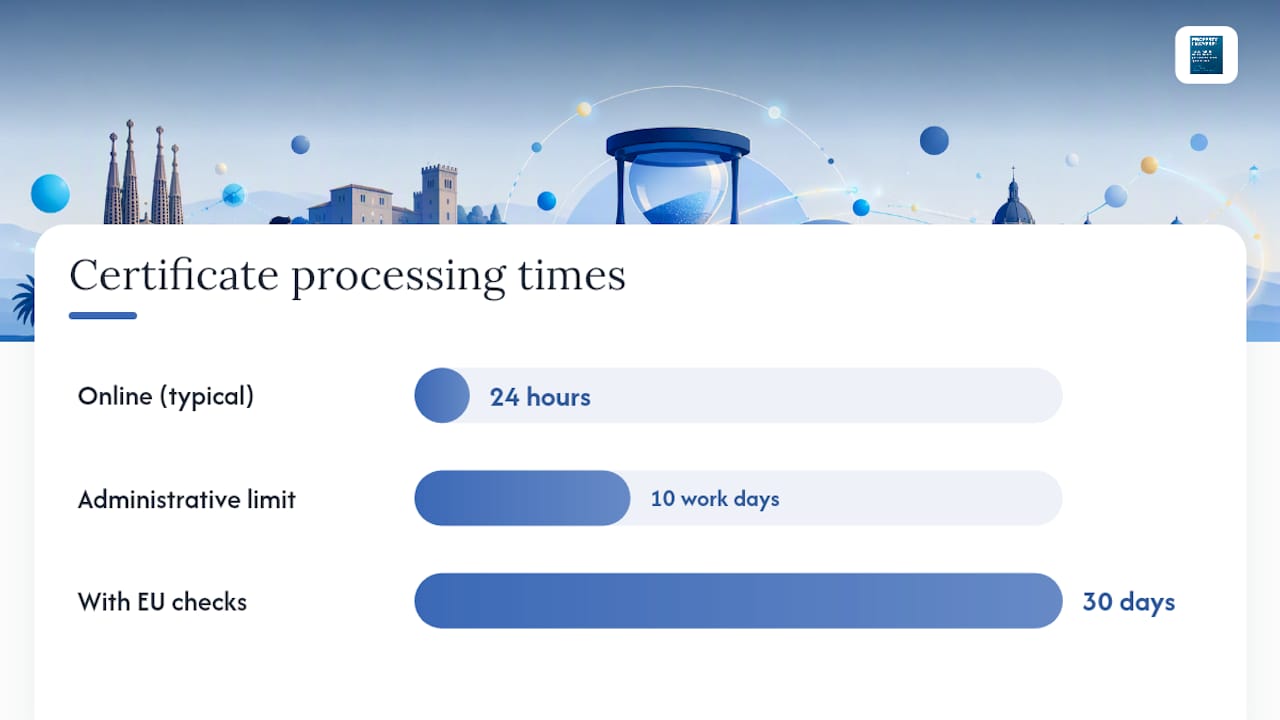
| Allow for the maximum timeline | Online cases often clear in 24 hours, but administrative limits run to 10 working days, or 30 days with EU cross-checks. |
| Verify with CSV | Use the Secure Verification Code to confirm the certificate’s authenticity online. |
This article is general information, not a substitute for advice from a qualified lawyer. Consult a qualified legal professional about your own circumstances before acting on anything here.
Table of Contents
- What does the Spanish criminal record certificate actually show?
- How do you apply: online, by post, in person, or through a consulate?
- What documents and forms do you need before applying?
- How much does it cost and how do you pay Form 790-006?
- What role does a consulate play if you’re applying from abroad?
- How long does it take and how do you verify the certificate?
- Do you need an apostille to use the certificate abroad?
- Is the sexual offences certificate different from the standard record check?
- Can you check your own record before applying formally?
- What trips people up, and how do you avoid it?
- A note for property buyers and visa applicants
- Sources
- FAQ
What does the Spanish criminal record certificate actually show?
The certificate is issued by the Ministry of Justice and draws directly on the Central Registry of Sentences (Registro Central de Penados), Spain’s national database of criminal convictions. It reflects whatever is on file on the date it’s issued, nothing more, nothing less.
Two things it usually does not do: it won’t automatically include convictions from other countries unless an international cross-check has been requested, and it isn’t the same as a certificate confirming you’re cleared to work with children. For official recognition, you’ll want the certificate to come from:
- The Ministry of Justice (issuing body)
- The Central Registry of Sentences (data source)
How do you apply: online, by post, in person, or through a consulate?
Each route suits a different situation, so pick based on where you are and how quickly you need the document.
- Online. You’ll need a digital certificate, Cl@ve, or another accepted electronic ID. Once submitted, the certificate is often ready within 24 hours and downloads with its CSV attached for verification.
- By post. Send your application to the Oficina Central de Atención al Ciudadano or the relevant Territorial Gerencia, along with certified copies of your ID and a bank transfer receipt proving you’ve paid the fee.
- In person. You or an authorised representative can attend a Territorial Management office directly, pay there if needed, and sometimes collect the certificate on the same visit.
- Via consulate. Your consulate can certify copies and forward the application to the correct Territorial Management office, though the consulate itself never issues the certificate.
Whichever route you choose, you’ll be working with Form 790-006, the official payment form for this process.
Pro Tip: Postal applicants get fewer follow-up requests when they attach a clear passport copy, a signed and dated Form 790, and the original bank transfer receipt in one envelope, not split across separate mailings.
What documents and forms do you need before applying?
Assembling the right paperwork upfront avoids the single biggest cause of delay: incomplete submissions.
- Completed application form
- Form 790-006 with proof of payment attached
- Original ID (passport or DNI)
- Certified photocopies (fotocopia compulsada) of that ID
- A signed authorisation if someone else is collecting on your behalf
A “compulsada” copy is simply one stamped and certified as a true copy, by a consulate, a Spanish notary, or a Spanish government office. Photocopies without that stamp get rejected more often than any other single document fault.
Pro Tip: Filling box 15 of Form 790 with an email address lets the Ministry send your certificate electronically, often faster than post. Check your spam folder, since these arrive from a no-reply address that filters sometimes catch.
How much does it cost and how do you pay Form 790-006?
Form 790-006 is the fee payment form, and you’ll need to attach proof of payment (a receipt or bank transfer confirmation) whenever you apply by post or through a consulate. Download the current version directly from the Ministry site rather than relying on an older PDF you find elsewhere, since fee amounts and form fields do get updated.
- Applicants abroad typically pay by international bank transfer to the Ministry’s designated account.
- Always check the current fee on the official portal before paying, rather than trusting a figure from a forum or an old guide.
Pro Tip: Keep your transfer receipt showing the IBAN and BIC details clearly. Postal and consular applications get rejected more often when payment evidence is incomplete than for almost any other reason.
What role does a consulate play if you’re applying from abroad?
Consulates are intermediaries, not issuers. They’ll certify your documents and forward the application to Spain, but the actual certificate still comes from the Ministry’s Territorial Management office, and collecting it is usually your responsibility.
- Book a consular appointment to have your ID copies certified.
- The consulate sends certified copies and your application to the correct Territorial Management office.
- Include proof of Form 790 payment and any representation authorisation if someone else in Spain will collect the document.
- Check your specific consulate’s page, since appointment procedures and jurisdiction rules vary by location.
Pro Tip: If you won’t be in Spain to collect the certificate yourself, appointing a representative through a power of attorney solves this cleanly, particularly useful if you’re already using one for a property purchase.
How long does it take and how do you verify the certificate?
Once issued, the Ministry attaches a Secure Verification Code (CSV) to the document, which anyone can use to confirm authenticity through the Ministry’s online verification service. You’ll usually get notified by SMS or email when it’s ready.
On timing: online applications are often ready within 24 hours, but the Administration has up to 10 working days as its standard limit, stretching to 30 calendar days if EU cross-checks are needed. Plan around the longer window if you’re working to a visa or property completion deadline.
- Paper post to your registered address
- Email with a secure download link
- Collection in Spain by an authorised representative
Do you need an apostille to use the certificate abroad?
If you’re using the certificate outside the EU, most countries will expect it to carry a Hague Apostille, the internationally recognised stamp confirming a public document’s authenticity. The Ministry can issue the certificate already apostilled or legalised if you ask at the time of application.
- Non-EU use: apostille is typically required.
- EU use: legalisation is often unnecessary for certain purposes, though this depends on the receiving country and institution.
Pro Tip: Request the apostille when you submit your application. Adding it afterwards means a separate step, and separate steps mean separate waiting periods.
Is the sexual offences certificate different from the standard record check?
Yes, and this catches people out regularly. The standard criminal record certificate does not qualify anyone to work with minors. If your role involves children or vulnerable groups, you need a separate Certificate of Sexual Nature Offences.
- Request it through the Ministry’s electronic services, separately from the standard certificate.
- Employers in education, childcare, and similar sectors typically ask for this specific document, not the general one.
Can you check your own record before applying formally?
Yes. Mi Carpeta Ciudadana lets you view your own status using a digital certificate, a useful way to spot problems before committing to the formal, paid application.
- Log in with your digital certificate or Cl@ve ID.
- View your current entries informally.
- Still apply for the official certificate for any legal, visa, or employment purpose. The informal view isn’t accepted as evidence.
What trips people up, and how do you avoid it?
Most delays trace back to the same handful of mistakes, and they’re avoidable once you know to look for them.
- Incomplete Form 790 fields, particularly the email box.
- Photocopies that weren’t properly certified (compulsada).
- Missing authorisation when a representative collects on your behalf.
- Payment proof that’s unclear or missing key transfer details.
Pro Tip: Double-check your passport number and email address on Form 790 before submitting; these two fields cause more rejections than anything else. Consulate requirements also vary slightly by location, so confirm what your specific office wants before you post anything.
A note for property buyers and visa applicants
If you’re buying property, applying for residency, or going through a long-stay visa process, this certificate is often a required document, and timing it wrong can stall a conveyancing timeline or visa file for weeks. Getting the right legal support early, through a service like Property-lawyers, helps keep these documents moving alongside everything else.
Getting a Spanish criminal record certificate correctly the first time depends on choosing the right application route, preparing certified documents, and requesting an apostille upfront if you’ll need one abroad.
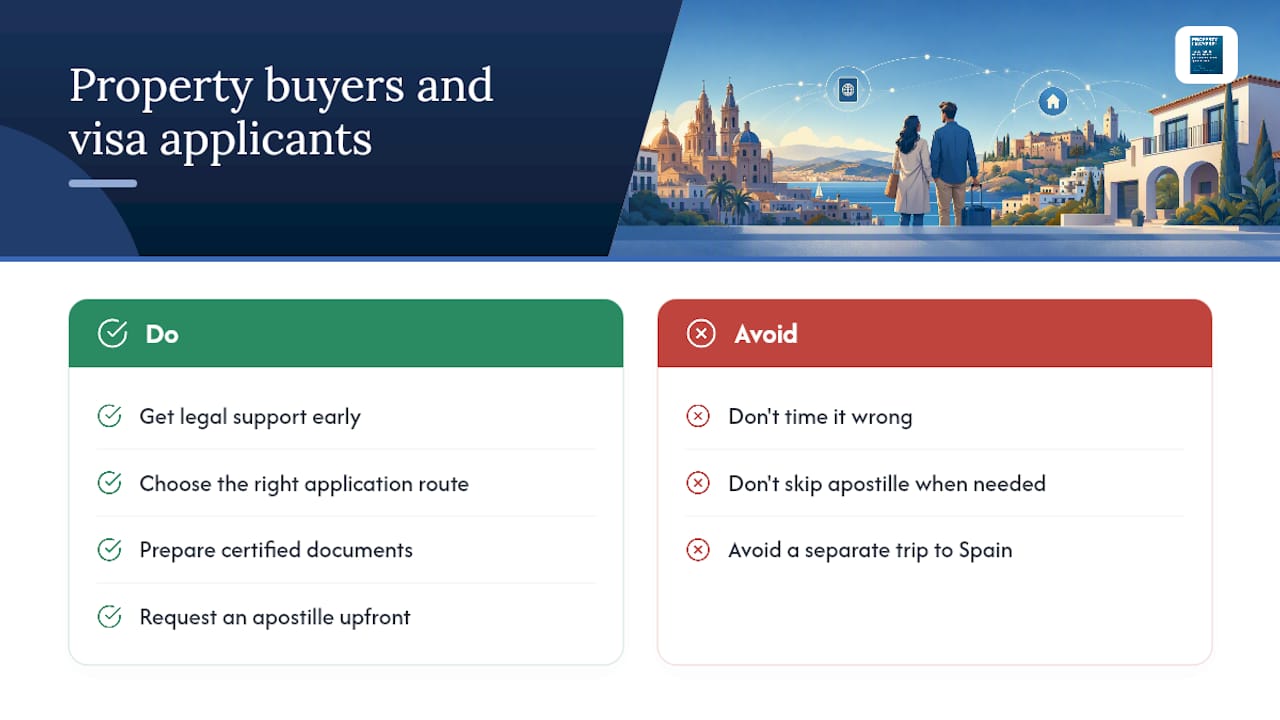
If you’re navigating a property purchase alongside your residency paperwork, coordinating this certificate with a power of attorney arrangement often saves a separate trip to Spain. Property-lawyers connects international buyers with vetted, English-speaking lawyers who handle exactly this kind of document sequencing as part of a wider conveyancing process, so nothing stalls your purchase timeline.
Sources
FAQ
How can I check my criminal record in Spain?
Apply for the official certificate online through the Ministry of Justice using a digital certificate, or view an informal status through Mi Carpeta Ciudadana first.
How long does a criminal record last in Spain?
The certificate reflects whatever entries exist in the Central Registry of Sentences on the date it’s issued; how long a specific conviction remains on file depends on the offence and sentence type.
Can I check if I have a criminal record?
Yes, using Mi Carpeta Ciudadana with a digital certificate gives an informal view, though only the official Ministry-issued certificate is valid for visa, employment, or legal purposes.
Is a background check legal in Spain?
Yes. Requesting your own criminal record certificate through official Ministry of Justice channels is a standard, legal procedure required for many visa, residency, and employment processes.
Recommended
- How to check property legal status in Spain
- Spanish property registry: what UK buyers must check
- Spanish land registry search: a guide for international buyers

Sophie Gutenberg is a legal content specialist focused on Spanish property law, real estate transactions, conveyancing, due diligence and tax issues affecting international property buyers in Spain. She works alongside qualified Spanish property lawyers .
