Why translate Spanish property documents: a clear guide
Buying property in Spain as a foreign national involves far more than agreeing a price and signing a contract. One of the most frequently misunderstood requirements is the translation of legal documents, and specifically the type of translation that Spanish authorities will actually accept. Many buyers assume that any bilingual translation will do. It will not. Understanding why translate Spanish property documents correctly matters, and what the term “sworn translation” means in practice, can save you from costly delays, rejected filings, and serious legal disputes before you even receive the keys.
Table of Contents
- Key takeaways
- Why translate Spanish property documents: the legal framework
- Documents that require translation in Spain
- Risks of inadequate document translation
- Practical steps for obtaining valid translations
- Comparing translation types: what Spain accepts
- My perspective: precision matters more than you think
- How Property-lawyers can help you get this right
- FAQ
Key takeaways
| Point | Details |
|---|---|
| Sworn translation is mandatory | Only translations by an MAEC-accredited sworn translator carry legal validity in official Spanish property processes. |
| Apostille comes first | You must obtain an apostille on the original document before commissioning a sworn translation. |
| Multiple documents are affected | Purchase deeds, contracts, tax documents, and corporate governance papers all require certified translation. |
| Inadequate translation carries real risk | Faulty or informal translations can cause document rejection, contract disputes, or financial penalties. |
| Corporate buyers face extra requirements | Companies must also translate governance and authorisation documents alongside property sale paperwork. |
Why translate Spanish property documents: the legal framework
Spain has a formal statutory basis for its translation requirements, and it is not optional. Ley 29/2015, Spain’s law on international judicial cooperation in civil matters, establishes that documents exchanged across borders in legal proceedings must be accompanied by a translation into the official language of the receiving state. For property transactions, this means Spanish. Full stop.
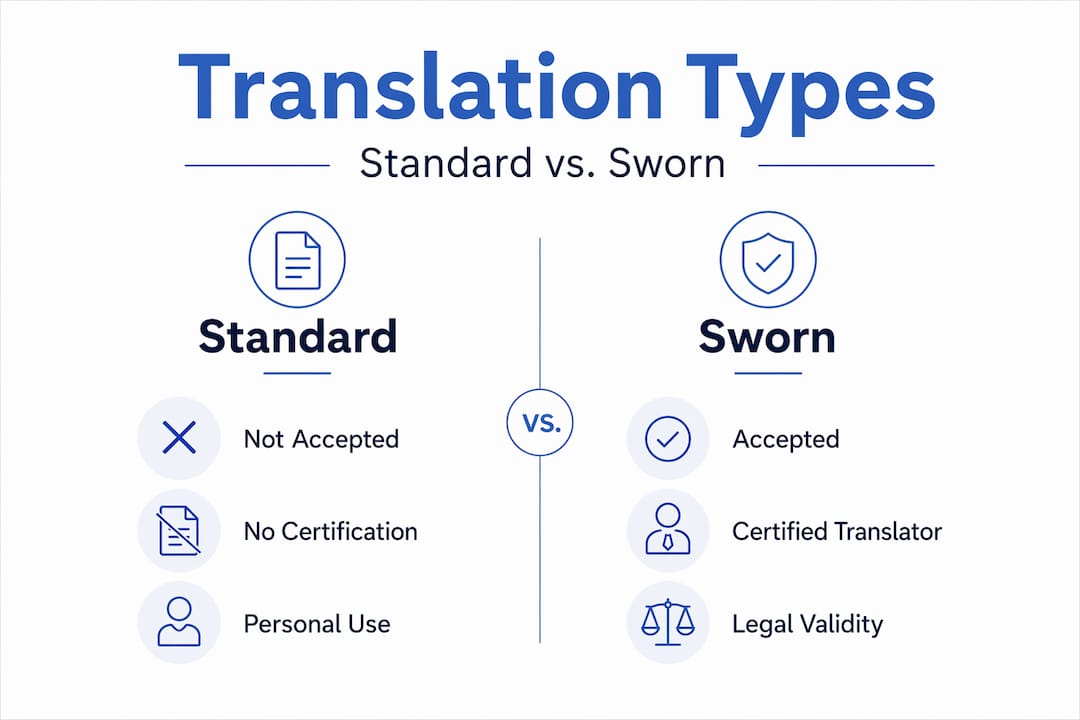
The distinction that catches most foreign buyers off guard is the difference between a standard translation and a sworn translation (known in Spanish as traducción jurada). A sworn translation is not simply a bilingual version of a document. It is a legally certified rendition produced by a translator officially appointed by the Spanish Ministry of Foreign Affairs, European Union and Cooperation, commonly referred to as the MAEC. Sworn translations must bear the translator’s official certification, signature, and seal to carry legal weight.
Spanish authorities evaluate document submissions against evidentiary thresholds. A document that is perfectly understandable in English will still be rejected if it has not been produced as a sworn translation by an accredited professional. This is not a technicality that can be argued around at a notary’s office or land registry.

Here is a summary of how the legal framework applies to property transactions:
| Requirement | Standard translation | Sworn translation |
|---|---|---|
| Accepted by Spanish notaries | No | Yes |
| Accepted by land registry | No | Yes |
| Accepted by tax authorities | No | Yes |
| Produced by MAEC-accredited translator | No | Yes |
| Carries legal certification and seal | No | Yes |
The importance of translating property papers correctly is therefore not a matter of preference. It is a condition of legal validity.
Documents that require translation in Spain
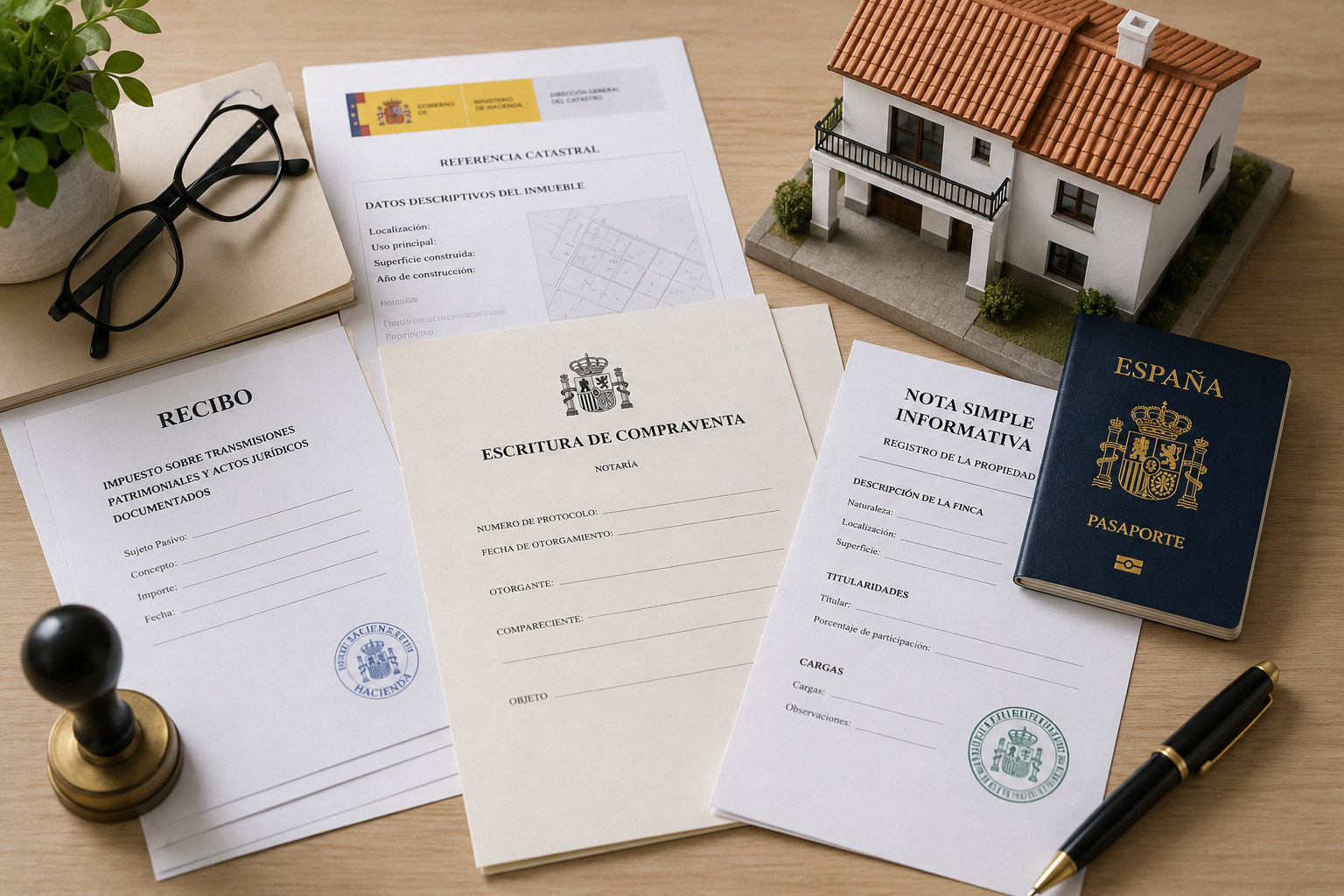
The scope of documents requiring sworn translation in a Spanish property transaction is broader than most buyers expect. Multiple document types typically require certified translation, including purchase deeds, private purchase contracts, tax documents, mortgage agreements, and powers of attorney.
The following documents most commonly require sworn translation for individual buyers:
- Purchase deed (escritura de compraventa): the primary legal instrument transferring ownership
- Private purchase contract (contrato privado de compraventa): often signed before the deed
- NIE application documents: foreign identification documents submitted to Spanish authorities
- Power of attorney: if you are authorising a lawyer or representative to act on your behalf
- Tax declarations: including non-resident income tax filings and property transfer tax forms
- Mortgage documentation: if financing through a Spanish lender
For corporate buyers, the requirements go further. Companies purchasing Spanish property must also provide sworn translations of company governance documents, articles of association, certificates of incorporation, and any board resolutions authorising the transaction. This applies particularly to non-EU companies and non-resident buyers, who face the most stringent compliance requirements.
One additional layer that is frequently overlooked is the apostille. Both apostille and sworn translation are mandatory for foreign public documents submitted to Spanish authorities. A standard certified translation alone is not sufficient.
Pro Tip: If you are using a foreign-issued power of attorney in Spain, have the original document apostilled in your home country before sending it to a sworn translator. Attempting to apostille a translated copy is a common mistake that causes significant delays.
Risks of inadequate document translation
The consequences of submitting poorly translated or uncertified documents in a Spanish property transaction are not minor inconveniences. They range from administrative delays to full transaction collapse. Understanding the impact of untranslated documents, or documents translated without proper certification, is one of the clearest arguments for getting this right from the outset.
Here are the most significant risks in order of severity:
- Document rejection by Spanish authorities. Notaries and land registries will refuse to process documents that do not meet sworn translation requirements. This can halt a transaction entirely until compliant translations are obtained.
- Contractual disputes. Inaccurate translations can nullify contracts or lead to costly litigation. If a clause is mistranslated and a party acts on the incorrect version, the legal consequences can be severe.
- Tax and financial penalties. Errors in translated tax documents submitted to the Spanish tax authority (Agencia Tributaria) can result in incorrect filings, penalties, or audits. This is particularly relevant for non-resident property owners with annual tax obligations.
- Mortgage rejection. Spanish lenders require sworn translations of foreign financial documents. Submitting uncertified versions can delay or invalidate a mortgage application at a critical stage of the purchase.
- Loss of deposit. If a transaction collapses due to non-compliant documentation on the buyer’s side, the private purchase contract may allow the seller to retain the deposit paid.
“Legal translation is not simply about conveying meaning across languages. It is about preserving the precise legal effect of every term, clause, and obligation so that all parties are bound by identical rights and responsibilities.” (Legal translation explained)
Sworn translations must replicate legal and financial details entirely, including tables, figures, and official language. Any omission, however minor it appears, can result in document rejection or misinterpretation by the receiving authority.
Practical steps for obtaining valid translations
Knowing you need a sworn translation is only the starting point. The process of obtaining one correctly, in the right order, with the right professional, requires a clear plan. Here is how to approach it.
Finding an accredited sworn translator
Only translators officially appointed by the MAEC are authorised to produce sworn translations for use in Spanish legal proceedings. You can search the official MAEC register on the Spanish Ministry of Foreign Affairs website. When working with a translator, confirm their appointment number and ask to see their official seal before proceeding.
Following the correct order of steps
This is where many buyers go wrong. Apostille must be obtained on the original document before the sworn translation is produced. Spanish authorities treat apostille and sworn translation as separate validation steps. If you apostille a translated document rather than the original, the apostille is considered invalid and the entire process must restart.
The correct sequence is:
- Obtain the original document (birth certificate, power of attorney, company certificate, etc.)
- Have the original apostilled by the competent authority in the issuing country
- Submit the apostilled original to an MAEC-accredited sworn translator
- Receive the sworn translation with the translator’s certification and seal attached
Prioritising documents early
Do not wait until the notary appointment to begin the translation process. Sworn translations can take several days to a week depending on document complexity and translator availability. For corporate buyers, governance documents such as articles of association and board resolutions should be translated well in advance of the transaction.
Pro Tip: If you are buying property through a company, instruct your Spanish property lawyer to provide a complete document checklist at the outset. Corporate transactions involve significantly more paperwork, and missing a single governance document can delay completion by weeks.
For foreign buyers seeking broader guidance on legal compliance, the buying property in Europe guide published by Property-lawyers provides useful context on how translation requirements fit within the wider legal framework across jurisdictions.
Comparing translation types: what Spain accepts
Not all translations are equal in the eyes of Spanish law. The table below clarifies the three main types and their legal standing in property transactions.
| Translation type | Who produces it | Legal certification | Accepted by Spanish authorities | Typical use case |
|---|---|---|---|---|
| Standard translation | Any bilingual translator | None | No | Internal understanding only |
| Certified translation | Professional translator with declaration | Limited | Rarely | Some private commercial contexts |
| Sworn translation | MAEC-accredited sworn translator | Yes, with official seal | Yes | All official property and legal processes |
The distinction matters because only sworn translations have legal validity and are signed by an appointed translator recognised by the Spanish Ministry of Foreign Affairs. A certified translation, which is produced by a professional translator who signs a declaration of accuracy, does not meet the evidentiary threshold required by Spanish notaries, registries, or tax authorities.
For buyers working with cross-border legal matters, understanding international legal compliance is relevant context, particularly where documents originate from multiple jurisdictions and must satisfy Spanish requirements simultaneously.
The benefits of translating real estate documents correctly, and specifically using sworn translations, extend beyond mere compliance. They protect you from disputes, give your transaction legal certainty, and demonstrate to Spanish authorities that your documentation is in order.
My perspective: precision matters more than you think
I have worked with enough international property buyers to know that translation is almost always treated as an afterthought. Buyers focus on the price, the mortgage, the survey. The paperwork feels like administration. That mindset is where things go wrong.
What I have seen in practice is that the errors are rarely dramatic. It is not usually a completely wrong translation. It is a mistranslated clause about payment conditions, or a corporate document where the translator has used a generic term instead of the precise legal equivalent. Those small inaccuracies are the ones that create real problems, because they change the legal meaning of the document without either party realising it until there is a dispute.
My strongest advice is this: choose your sworn translator the same way you choose your lawyer. Check their MAEC registration. Ask whether they have experience with property transactions specifically, because legal precision in property documents requires sector knowledge, not just language fluency.
I have also seen buyers try to save money by using online translation services for documents they consider straightforward, such as bank statements or utility bills. Spanish authorities reject these without exception. The cost of resubmitting with a proper sworn translation, after a notary appointment has been delayed, is always higher than the original fee would have been.
Get the translation right at the start. It is one of the few parts of a Spanish property transaction where there is genuinely no shortcut worth taking.
— Sophie
How Property-lawyers can help you get this right
Navigating sworn translation requirements alongside the full complexity of a Spanish property purchase is a significant undertaking, particularly for international buyers unfamiliar with Spanish legal processes.
Property-lawyers connects you with trusted, independent real estate lawyers in Spain who understand exactly what documentation is required, in what form, and in what order. Whether you are an individual buying a holiday home or a company acquiring commercial property, a qualified Spanish property lawyer can guide you through the full compliance process, from identifying which documents need sworn translation to coordinating with notaries and registries on your behalf. Visit Property-lawyers.com to find an English-speaking solicitor in your area of Spain today.
FAQ
What is a sworn translation in Spain?
A sworn translation is a legally certified translation produced by a translator officially appointed by the Spanish Ministry of Foreign Affairs (MAEC). It carries the translator’s official seal and signature, making it the only translation type accepted by Spanish notaries, land registries, and tax authorities.
Do all property documents need sworn translation in Spain?
Not every document requires sworn translation, but all documents submitted to Spanish public authorities in a foreign language do. This includes purchase deeds, powers of attorney, tax documents, mortgage agreements, and corporate governance papers for company buyers.
What happens if I submit an uncertified translation?
Spanish authorities will reject documents that do not meet sworn translation requirements. This can delay or halt your property transaction, and in some cases lead to financial penalties or loss of deposit if deadlines are missed.
Does apostille replace the need for sworn translation?
No. Apostille and sworn translation are separate requirements. The apostille authenticates the original document, while the sworn translation provides a legally certified version in Spanish. Both are required for foreign public documents submitted in Spain.
How do I find an accredited sworn translator for Spanish property documents?
Search the official register maintained by the Spanish Ministry of Foreign Affairs (MAEC) on their website. Confirm the translator’s appointment number and ask to see their official seal before commissioning any work.

Sophie Gutenberg is a legal content specialist focused on Spanish property law, real estate transactions, conveyancing, due diligence and tax issues affecting international property buyers in Spain. She works alongside qualified Spanish property lawyers .
