

Property tax in spain: 2026 guide for non-residents
TL;DR:
- Property tax in Spain consists of multiple taxes including IBI, IRNR, Wealth Tax, and Capital Gains Tax, each with distinct calculation methods and filing requirements. Non-residents face specific obligations, with rates differing based on residency status, and regional variations influence acquisition costs significantly. Proper early compliance and professional guidance are crucial to avoid penalties and maximize deductions like the recent expense deductibility for non-EU owners.
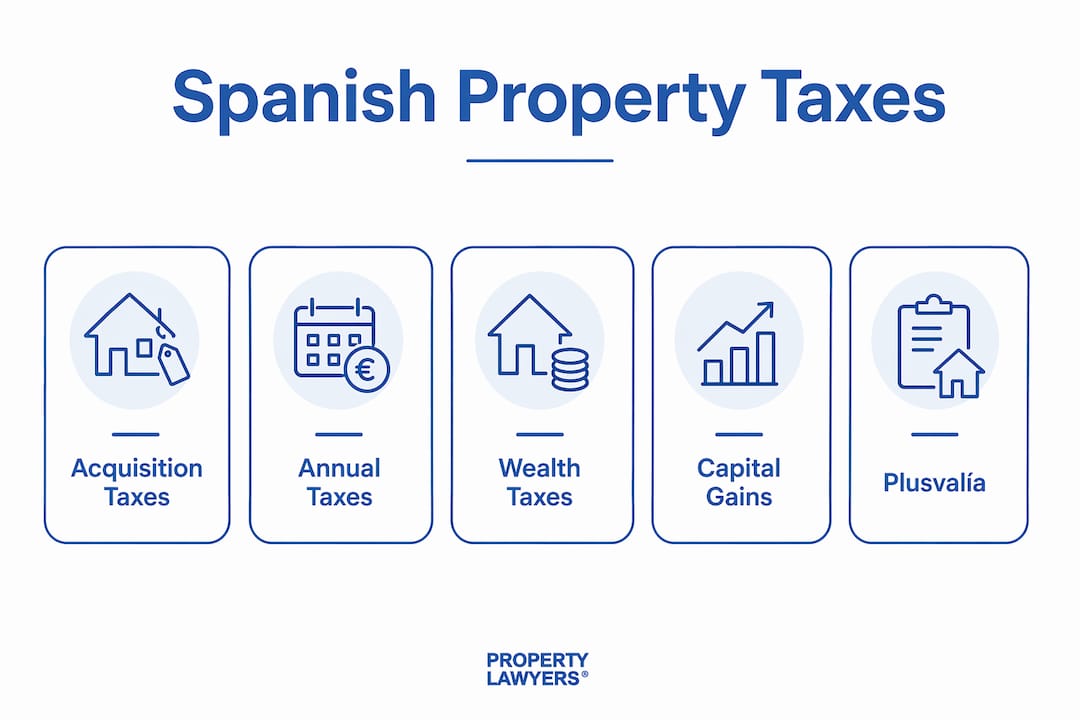
Property tax in Spain is not a single levy but a collection of distinct taxes that apply at the point of purchase, throughout ownership, and upon sale. For non-residents and expatriates, these obligations span Transfer Tax, the annual municipal property tax known as IBI, Non-Resident Income Tax (IRNR), Wealth Tax, and Capital Gains Tax. Each is calculated differently, filed separately, and governed by rules that vary depending on whether you are an EU, EEA, or non-EU resident. Since Brexit, UK buyers fall into the non-EU category, which affects both tax rates and deductibility. Understanding the full picture before you buy is the most effective way to avoid penalties and unexpected costs.
What acquisition taxes apply when buying property in spain?
The taxes you pay when purchasing Spanish property depend on whether the property is a resale or a new build. Getting this distinction right matters because the tax types, rates, and filing obligations differ significantly.
For resale properties, the main acquisition tax is Transfer Tax, known formally as Impuesto sobre Transmisiones Patrimoniales (ITP). For new builds purchased directly from a developer, VAT applies instead of Transfer Tax, alongside Stamp Duty (Actos Jurídicos Documentados, or AJD).
Here is a summary of the key acquisition taxes:
- Transfer Tax (ITP): Applies to resale properties. Rates range from 6% to 11.5% depending on the autonomous community. Andalucía charges 7%, while Catalonia charges up to 11%.
- VAT (IVA): Applies to new build purchases. The standard rate is 10% for residential properties, or 4% for officially designated social housing.
- Stamp Duty (AJD): Applies to new builds alongside VAT. Rates vary regionally, typically between 0.5% and 1.5%.
- 3% Withholding (Retención): When buying from a non-resident seller, the buyer must withhold 3% of the sale price as an advance Capital Gains Tax payment on behalf of the seller. The seller must then reclaim any excess within four months.
Regional variation is one of the most overlooked aspects of acquisition costs. A buyer purchasing in the Balearic Islands faces a higher ITP rate than one buying in Madrid, where regional incentives have historically reduced the burden. Always confirm the applicable rate for the specific region before signing any contract.
Pro Tip: Conduct thorough due diligence checks before exchanging contracts. Verifying the cadastral value at this stage gives you a reliable estimate of your ongoing IBI and IRNR obligations before you commit.
One proposal currently under debate would impose a 100% tax on property purchases by non-EU buyers who are not resident in the EU. This measure has not yet been enacted, but it reflects a broader political direction worth monitoring if you are a non-EU national considering a purchase.
How do annual property ownership taxes work in spain?
Once you own a property in Spain, two primary annual tax obligations arise: the local municipal property tax (IBI) and the Non-Resident Income Tax (IRNR). These are entirely separate obligations, filed through different channels, and confusion between them is one of the most common and costly mistakes non-resident owners make.
The local municipal property tax (IBI)
IBI is the Spanish equivalent of council tax. It ranges from 0.4% to 1.1% of the property’s cadastral value, with annual costs typically between €200 and €1,500 depending on the property and municipality. The cadastral value is an administrative valuation set by the Spanish tax authority and is generally lower than the market price. IBI is issued automatically by the local town hall and must be paid annually, usually between October and December. You do not need to file a return; the bill arrives and you pay it. Setting up a direct debit through a Spanish bank account is the simplest way to avoid missing the payment.

Small additional municipal charges also apply. Rubbish collection fees are typically between €80 and €200 per year and are billed alongside or separately from IBI depending on the municipality.
Non-resident income tax (IRNR)
IRNR is a national tax that applies to non-residents regardless of whether they rent their property out or leave it empty. There is no single non-resident property tax; treating these obligations as one causes missed filings and penalties. IRNR is self-assessed, meaning you are responsible for filing and paying it yourself.
The filing obligations differ based on how you use the property:
- Empty or personally used property: You pay tax on imputed income, calculated as either 1.1% or 2% of the cadastral value. The 1.1% rate applies where the cadastral value has been revised in the last ten years; 2% applies otherwise. The annual filing deadline is 31 December of the year following the tax year.
- Rental income: You pay tax on actual rental receipts. Quarterly filings are required, with returns due in April, July, October, and January for each preceding quarter.
The applicable tax rate depends on your residency status:
| Residency Status | IRNR Rate on Imputed Income | IRNR Rate on Rental Income | Expense Deductions |
|---|---|---|---|
| EU / EEA resident | 19% | 19% on net income | Yes, full deductions |
| Non-EU resident (incl. UK) | 24% | 24% on net income | Yes, from 2024 onwards |
A September 2025 court ruling confirmed that non-EU residents can now deduct expenses on rental income, a right previously restricted to EU residents. This is a significant change for UK owners post-Brexit. Eligible deductions include mortgage interest, maintenance costs, insurance, and property management fees.
Pro Tip: Register for non-resident property tax obligations as soon as you complete your purchase. Waiting until the filing deadline creates unnecessary pressure and increases the risk of errors.
What other taxes and charges are linked to property ownership?
Beyond IBI and IRNR, three further taxes can apply depending on the value of your assets and whether you sell the property.
Wealth tax and the solidarity tax
Wealth Tax (Impuesto sobre el Patrimonio) applies to non-residents on their net Spanish assets. The threshold is €700,000, with rates rising to 3.75% at the highest bracket. Non-residents do not benefit from the €300,000 primary residence exemption that applies to Spanish tax residents. That distinction means a non-resident with a €900,000 property faces a higher effective Wealth Tax liability than a resident with the same asset.
The Temporary Solidarity Tax on Large Wealth applies to individuals with net assets exceeding €3 million, with rates up to 3.5%. This tax has been extended and a 60% shielding mechanism now caps personal liability, as confirmed by administrative tribunals since late 2025.
Capital gains tax on property sales
When a non-resident sells a Spanish property, Capital Gains Tax applies to the profit. The rates are:
- EU / EEA residents: 19% on the gain
- Non-EU residents (including UK buyers): 24% on the gain
Allowable deductions reduce the taxable gain and include acquisition costs, notary fees, property improvements, and estate agent commissions. The buyer withholds 3% of the sale price at completion and pays it directly to the Spanish tax authority. If the actual Capital Gains Tax liability is lower than the amount withheld, the seller must file to reclaim the difference within four months of the sale.
For further detail on the withholding process and refund procedure, the Capital Gains Tax guide from Property-lawyers covers the full process for non-resident sellers.
Plusvalía municipal
Plusvalía Municipal is a local tax charged by the town hall on the increase in land value since the property was last transferred. It is calculated using the cadastral land value and the number of years of ownership, not the actual profit made on the sale. The seller typically pays this tax, though it is negotiable between parties. For full details on how this tax is calculated and what sellers can expect, the Plusvalía Municipal guide provides a clear breakdown.
How to comply with spanish property tax filings
Filing obligations for non-resident property owners in Spain require active management. The key instrument is Form 210, which covers all IRNR filings. Whether you are declaring imputed income on an empty property or reporting quarterly rental receipts, Form 210 is the document you use.
Follow these steps to stay compliant:
- Obtain your NIE. The Número de Identificación de Extranjero is required for all tax filings in Spain. Administrative delays are common, so apply as early as possible, ideally before or immediately after purchase.
- Separate IBI from IRNR. IBI is billed automatically by the town hall. IRNR is self-assessed and will not arrive as a bill. You must file it yourself or appoint a representative to do so.
- Set calendar reminders. The annual IRNR deadline for imputed income is 31 December. Quarterly rental income returns are due in April, July, October, and January.
- Engage a gestor or tax adviser. A gestor is a licensed Spanish administrative professional who handles tax filings on your behalf. Many owners underestimate the administrative burden of Form 210 filings and face penalties as a result.
- Verify your cadastral value. The cadastral value underpins multiple taxes, including IBI and IRNR. Checking this figure before purchase gives you an accurate forecast of your annual tax liabilities.
Pro Tip: Keep records of all property-related expenditure, including invoices for repairs, insurance premiums, and mortgage statements. Since the 2024 ruling extended expense deductibility to non-EU residents, these documents directly reduce your taxable rental income.
Key takeaways
Property tax in Spain for non-residents comprises multiple separate obligations, each with its own calculation method, deadline, and filing requirement.
| Point | Details |
|---|---|
| Multiple taxes apply | Ownership triggers IBI, IRNR, and potentially Wealth Tax, each filed separately. |
| Cadastral value is the tax base | IBI and IRNR are calculated on cadastral value, not the market price you paid. |
| Rates differ by residency | EU/EEA residents pay 19% IRNR; non-EU residents, including UK owners, pay 24%. |
| Non-EU deductions now apply | From 2024, non-EU residents can deduct eligible expenses on rental income tax. |
| Form 210 is the key filing | All IRNR obligations are reported via Form 210, filed annually or quarterly. |
Why i think most non-resident owners get this wrong
Having worked with international property buyers across Spain for many years, the pattern I see most often is this: buyers focus entirely on the purchase price and acquisition taxes, then discover the ongoing obligations only when a penalty notice arrives. The IRNR filing on an empty property is the most frequently missed. It is not intuitive. You are not renting the property, you are not earning income, yet you still owe tax. The Spanish tax authority treats personal use as a form of imputed benefit, and it expects a return by 31 December every year.
The post-Brexit changes are genuinely positive for UK owners, and many have not yet acted on them. The 2024 ruling allowing non-EU residents to deduct expenses on rental income changes the maths considerably for anyone letting their property. If you have been filing without claiming deductions, you may have overpaid and could be entitled to a correction.
My strongest recommendation is to engage a qualified Spanish tax adviser before you complete a purchase, not after. The NIE process alone can take weeks, and without it, you cannot file anything. Starting early means you are compliant from day one rather than catching up under pressure.
— Sophie
Get expert legal support for your spanish property
Buying property in Spain as a non-resident involves a range of tax obligations that change with legislation, court rulings, and your own circumstances. Getting the filings right from the outset protects you from penalties and ensures you claim every deduction you are entitled to.

Property-lawyers connects international buyers and owners with trusted, independent property lawyers in Spain who specialise in non-resident tax compliance, acquisition due diligence, and ongoing legal support. Whether you need help with your first IBI query or a full review of your IRNR obligations, the directory makes it straightforward to find an English-speaking solicitor with the right expertise for your region and situation.
FAQ
What is the main annual property tax for non-residents in spain?
Non-resident owners pay two separate annual taxes: IBI, the local municipal property tax billed automatically by the town hall, and IRNR, the Non-Resident Income Tax filed via Form 210. Both are compulsory regardless of whether the property is rented out.
What rate of tax do UK buyers pay on spanish property income?
UK buyers are classified as non-EU residents following Brexit and pay IRNR at 24% on both imputed income and rental income. Since 2024, they can deduct eligible expenses from rental income before applying this rate.
Do i pay capital gains tax when selling a spanish property as a non-resident?
Yes. Non-EU residents pay Capital Gains Tax at 24% on the profit from a sale. The buyer withholds 3% of the sale price at completion, and the seller must file to reclaim any overpayment within four months.
What is the cadastral value and why does it matter?
The cadastral value is an administrative valuation assigned to your property by the Spanish tax authority. It forms the basis for calculating both IBI and IRNR on imputed income, so verifying it before purchase gives you an accurate forecast of your annual tax costs.
When must i file my annual IRNR return in spain?
For empty or personally used properties, the annual IRNR return must be filed by 31 December of the year following the tax year. For rental income, quarterly returns are due in April, July, October, and January.
Recommended
- Property Taxes in Spain — Full Guide for Foreign Owners (2026) | Property Lawyers
- Non-Resident Tax in Spain — Property Owners Guide | Property Lawyers
- Non-Resident Property Tax Spain — Annual Obligations Explained | Property Lawyers
- Capital Gains Tax in Spain for Non-Residents Selling Property | Property Lawyers

Sophie Gutenberg is a legal content specialist focused on Spanish property law, real estate transactions, conveyancing, due diligence and tax issues affecting international property buyers in Spain. She works alongside qualified Spanish property lawyers .
