
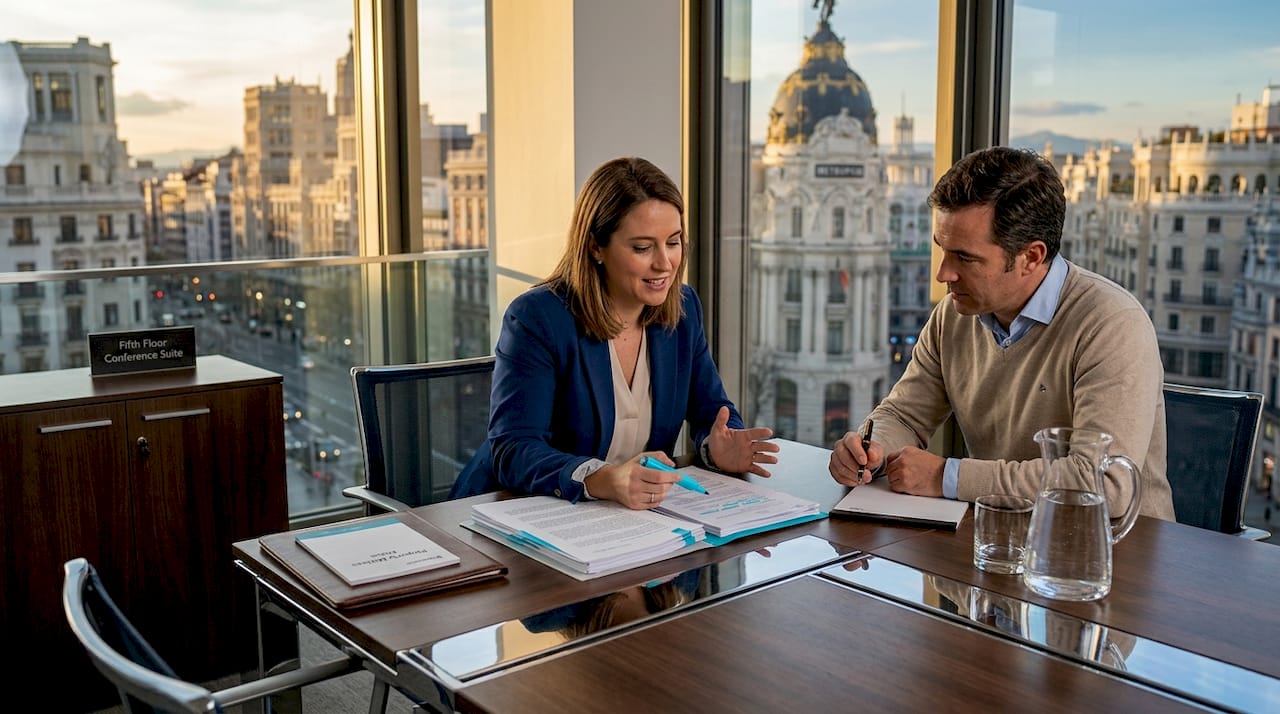
Benefits of bilingual legal services in Spain
Spain’s legal system is conducted entirely in Spanish, and for international buyers, business owners, and expatriates, that creates a real and immediate problem. Misread contracts, procedural errors, and poorly translated documents can cost thousands of euros and cause delays that derail property purchases or business deals. The benefits of bilingual legal services in Spain go far beyond having someone translate words. True bilingual legal support means you have a professional who understands Spanish law, speaks your language fluently, and can protect your interests at every stage of the process.
Table of Contents
- Key takeaways
- 1. The core benefits of bilingual legal services in Spain
- 2. Clearer communication builds stronger client-lawyer trust
- 3. Certified translations and document validity in Spain
- 4. Reducing interpretive gaps in cross-border property matters
- 5. Integrated language workflows for businesses with ongoing legal needs
- 6. Accessibility and inclusivity in legal communication
- My view: why true bilingual competence is not optional in Spain
- How Property-lawyers can connect you with the right bilingual solicitor
- FAQ
Key takeaways
| Point | Details |
|---|---|
| Communication accuracy matters | A bilingual lawyer prevents costly misunderstandings in instructions, negotiations, and legal strategy. |
| Certified translation is a legal requirement | Foreign documents submitted to Spanish authorities must be translated by a sworn translator to be valid. |
| Cultural fluency prevents costly errors | Bilingual counsel covers jurisdictional and terminology differences, not just language conversion. |
| Businesses benefit from integrated workflows | Centralised language management reduces inconsistencies across high-volume legal documents. |
| Accessibility is a growing legal priority | Bilingual services increasingly extend to accessible legal language adaptations for vulnerable groups. |
1. The core benefits of bilingual legal services in Spain
What exactly are bilingual legal services? The formal term used across the legal profession is “multilingual legal support,” which describes the combination of client communication, certified translation, procedural interpretation, and cross-cultural legal counsel provided by a qualified lawyer who is fluent in more than one language. It is not simply having a bilingual assistant sit in on a meeting.
For expatriates and foreign investors, this distinction is critical. Multilingual lawyers reduce misunderstandings across negotiations, contracts, and filings by offering cultural and procedural fluency that goes well beyond word-for-word translation. A lawyer who understands both the Spanish Civil Code and how property law works in your home country can identify points of conflict before they become disputes.
- Fluency in your language: Your lawyer communicates directly with you in plain terms, removing the risk of misinterpretation during critical moments such as signing contracts or responding to legal notices.
- Procedural understanding: They know which documents require sworn translation, when an interpreter must be present at a hearing, and what formalities Spanish authorities expect.
- Cultural competence: Legal customs differ. Knowing that a Spanish nota simple is not equivalent to a UK Land Registry title, for example, prevents assumptions that lead to errors.
Pro Tip: Ask any prospective lawyer whether they personally handle both the legal work and client communication in your language, or whether they rely on a separate translator. The difference in quality and accountability is significant.
2. Clearer communication builds stronger client-lawyer trust
One of the most underappreciated advantages of bilingual lawyers is the direct effect on the client-lawyer relationship. When you can speak candidly with your legal adviser, without pausing to double-check whether you understood correctly, the quality of the legal strategy improves. You share more context, ask better questions, and make more informed decisions.
This matters particularly in property transactions, where instructions change quickly. A client who cannot comfortably explain their concerns about a purchase contract is more likely to accept terms they would otherwise negotiate. A lawyer who conducts the entire relationship through a third-party interpreter introduces delays and introduces the possibility that nuances are lost.
Spanish courts guarantee interpreter assistance in criminal proceedings, and the standard applied is not mere availability but accuracy and quality of interpretation. That same principle applies to your civil and property matters. Effective communication is not a luxury. It is a precondition for an effective legal defence or transaction.
3. Certified translations and document validity in Spain
Spain’s official bodies, including the Registro de la Propiedad, the Notaría, and immigration authorities, do not accept standard translations of foreign documents. They require sworn translations produced by a translator accredited by the Spanish Ministry of Foreign Affairs.
Certified translations are legally valid for use with public authorities in Spain and are required for residency applications, citizenship processes, visa submissions, and property registrations. Common documents include:
- Birth and marriage certificates
- Criminal record certificates
- Foreign property title deeds
- Bank statements and proof of funds
- Company incorporation documents
A bilingual lawyer coordinates this process so that the right documents are identified early, sent to the appropriate sworn translator, and returned in time to meet procedural deadlines. A lawyer who manages both the legal advice and the translation requirements at intake prevents the scenario where a client submits non-certified translations and faces rejection or significant delays.
| Document type | Translation required | Common authority |
|---|---|---|
| Birth certificate | Sworn translation | Registro Civil |
| Foreign property deed | Sworn translation | Notaría / Registro de la Propiedad |
| Criminal record certificate | Sworn translation | Immigration / Residency Office |
| Company articles | Sworn translation | Mercantile Registry |
| Bank statement | Certified copy or sworn translation | Notaría |
4. Reducing interpretive gaps in cross-border property matters
Property purchases involving foreign buyers in Spain generate a particular category of risk. Legal terminology does not translate directly across jurisdictions. The Spanish concept of cargas y gravámenes (charges and encumbrances) carries specific procedural implications that differ from equivalent concepts in English or German property law. Without a bilingual property lawyer, buyers frequently misunderstand what they are agreeing to.
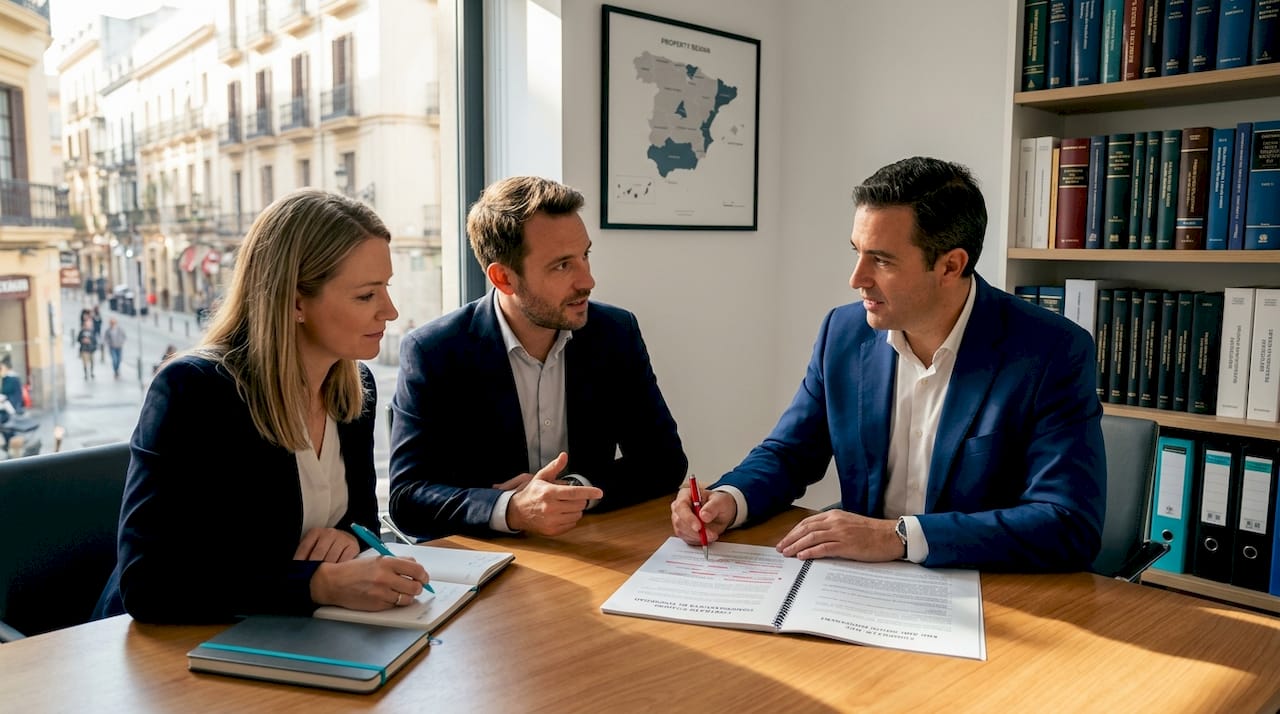
Bilingual counsel in property disputes prevents misunderstandings by interpreting legal meaning and negotiation nuances, not just the words on the page. This is especially relevant when the seller’s agent, notary, and local authority all communicate exclusively in Spanish.
The practical risks of interpretive gaps include:
- Signing a purchase contract with unfavourable penalty clauses because their scope was not fully explained
- Missing the significance of a registered embargo on a property
- Misunderstanding the payment schedule or the conditions under which a deposit is refundable
- Failing to account for tax obligations that differ between residents and non-residents
For international businesses operating in Spain, the stakes are equally high. Contract clauses, employment terms, and regulatory submissions all carry meaning that is specific to the Spanish legal context. Cross-border legal fluency reduces the risk of costly errors in both negotiations and formal filings.
5. Integrated language workflows for businesses with ongoing legal needs
For companies that regularly produce legal documentation in multiple languages, the benefits of legal translation extend into operational efficiency. An integrated approach to multilingual legal support centralises the management of translations, interpretations, contract templates, and regulatory filings under a single coordinated process.
Integrated translation workflows improve consistency and reduce operational gaps when high volumes of legal documents require processing. This avoids a common problem: different members of a team using inconsistent translations of the same clause across multiple contracts, creating ambiguity that surfaces during disputes.
Terminology governance is a specific component of this. A bilingual legal team that maintains a controlled glossary of approved translations for key terms ensures that “condición resolutoria” always appears correctly in English across every contract the company signs. Terminology governance in legal teams reduces repeated clarification cycles and saves measurable time.
Pro Tip: If your company manages more than ten legal documents per month in Spain, ask your bilingual legal adviser whether they offer a terminology register or translation memory service. This single step eliminates the most common source of legal inconsistency in multilingual business operations.
You can review options for ongoing legal support for property owners and international businesses through the Property-lawyers directory.
6. Accessibility and inclusivity in legal communication
The benefits of multilingual legal support are not limited to foreign language speakers. Spain has increasingly recognised that accessible legal language is itself a form of inclusion. Andalucía introduced easy-to-read judicial resolutions in June 2023 for people with intellectual disabilities, validated by specialist teams and members of the disability community for comprehension.
This development is legally and operationally significant. It signals that accessible communication is not a courtesy but a right. For bilingual legal service providers, it reinforces that clear legal language adaptation serves a formal function.
The practical implications for clients include:
- Bilingual lawyers in Spain can assist families navigating legal proceedings on behalf of relatives with comprehension difficulties
- International clients with cognitive or communication challenges can request adapted explanations in their own language
- Accessibility adaptations are increasingly expected by courts and public authorities, not just offered as a discretionary service
Cross-cultural legal representation that accounts for communication needs across language, cognition, and literacy creates a more equitable outcome for all clients.
My view: why true bilingual competence is not optional in Spain
I have observed a consistent pattern across years of reviewing property and business legal disputes in Spain. The problems rarely start with bad legal advice. They start with a communication failure that happened weeks or months earlier, in a meeting where the client thought they understood and the lawyer thought they had explained clearly. Both were wrong.
The distinction I keep returning to is the difference between a lawyer who translates and a lawyer who advises in your language. A lawyer who translates pauses at the end of every paragraph and produces a Spanish law term in your language. A lawyer who advises in your language thinks in both, catches the gaps before they become clauses, and tells you when something does not work the way you expect it to.
In my experience, the most common misunderstanding I see involves deposit structures in Spanish property contracts. Buyers from the UK frequently assume that the arras penitenciales deposit structure functions like a standard UK exchange deposit. It does not. The recovery conditions are different, the penalty structure is different, and the timeline for exercising rights is different. A bilingual lawyer catches this on day one. A lawyer working through an ad hoc interpreter catches it, if at all, much later.
When choosing a bilingual legal adviser in Spain, look for three things. Their legal qualification must be Spanish (not merely overseas). Their language fluency should be demonstrable, not claimed. And their experience should include the specific type of transaction you are undertaking. General practitioners who handle everything from immigration to criminal law are rarely the right choice for a property purchase. Specialisation matters.
— Sophie
How Property-lawyers can connect you with the right bilingual solicitor
If you are buying property in Spain or managing ongoing legal matters as an expatriate or foreign business, having the right bilingual solicitor at your side from the outset protects your interests at every stage.
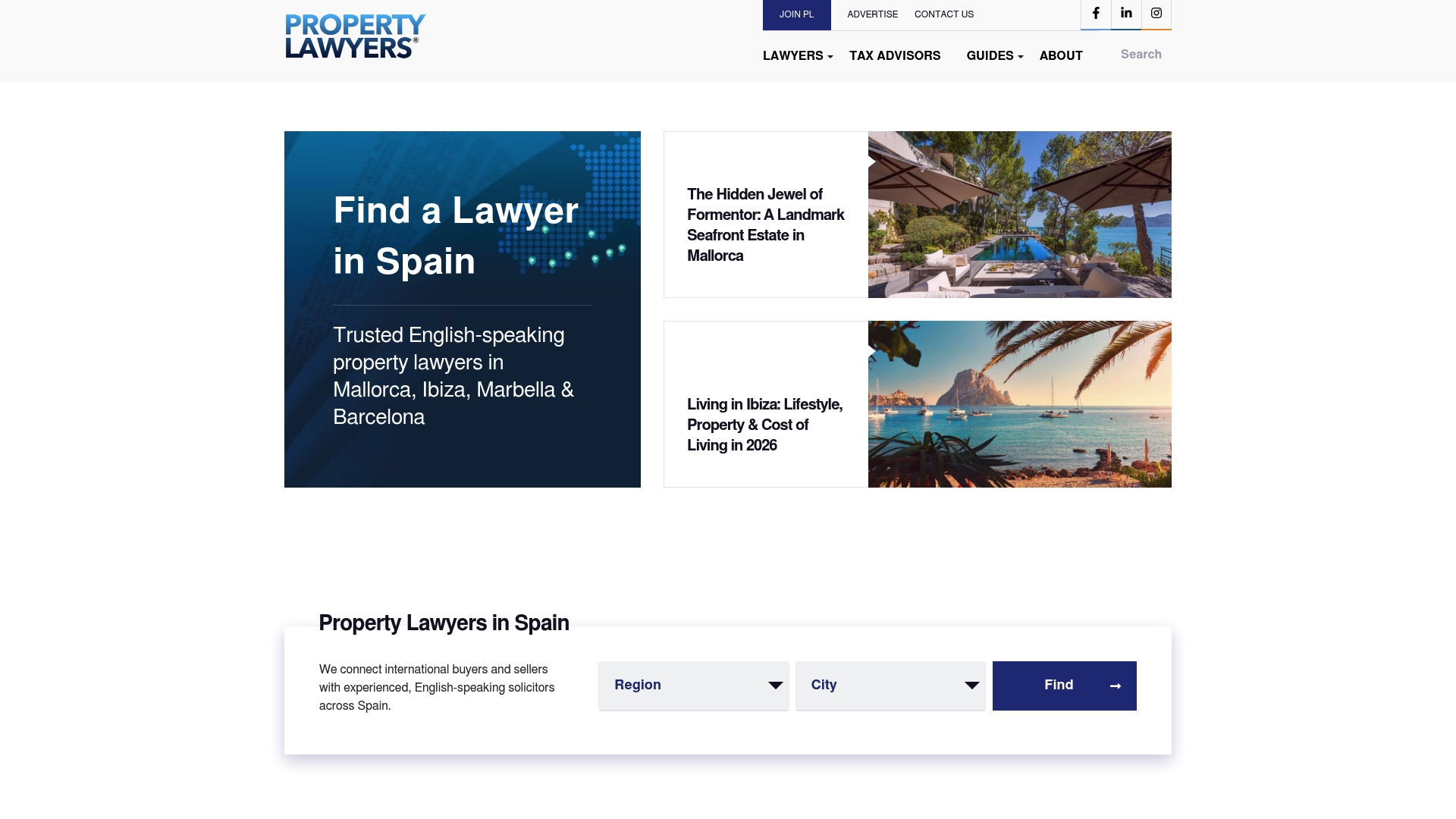
Property-lawyers is a directory of independent, English-speaking real estate solicitors with coverage across all major regions, from Madrid and Barcelona to the Balearics and the Costa del Sol. Every lawyer listed on the platform is independently vetted and experienced in assisting international clients with the full range of Spanish property legal services, from buying property in Spain with bilingual due diligence to rental licensing and compliance support for property owners.
Finding a solicitor who combines Spanish legal qualification with fluency in your language is not straightforward when you search alone. Property-lawyers simplifies the process by connecting you directly with trusted, specialist advisers who understand both the law and your situation.
FAQ
What are bilingual legal services in Spain?
Bilingual legal services in Spain refer to legal advice and representation delivered by a qualified Spanish lawyer who is also fluent in the client’s language, covering both direct communication and procedural requirements such as sworn translations.
Do documents submitted to Spanish authorities need certified translation?
Yes. Foreign documents submitted to Spanish authorities must be accompanied by a sworn translation produced by a translator accredited by the Spanish Ministry of Foreign Affairs, bearing their official stamp and signature.
Are bilingual lawyers more expensive than standard Spanish solicitors?
Not necessarily. The cost of a bilingual lawyer is typically comparable to that of a Spanish-only solicitor, and the potential savings from avoiding document rejections, contract errors, and procedural delays usually outweigh any marginal difference in fees.
Do I have a right to an interpreter in Spanish legal proceedings?
Yes. Non-Spanish speakers are entitled to interpreter assistance throughout criminal proceedings in Spain, including police questioning and judicial hearings, with courts empowered to verify the quality of interpretation provided.
How do I find a bilingual property lawyer in Spain?
The most reliable approach is to use a specialist directory such as Property-lawyers, which lists vetted, English-speaking real estate solicitors across Spain with direct experience assisting international buyers and property owners.

Sophie Gutenberg is a legal content specialist focused on Spanish property law, real estate transactions, conveyancing, due diligence and tax issues affecting international property buyers in Spain. She works alongside qualified Spanish property lawyers .
