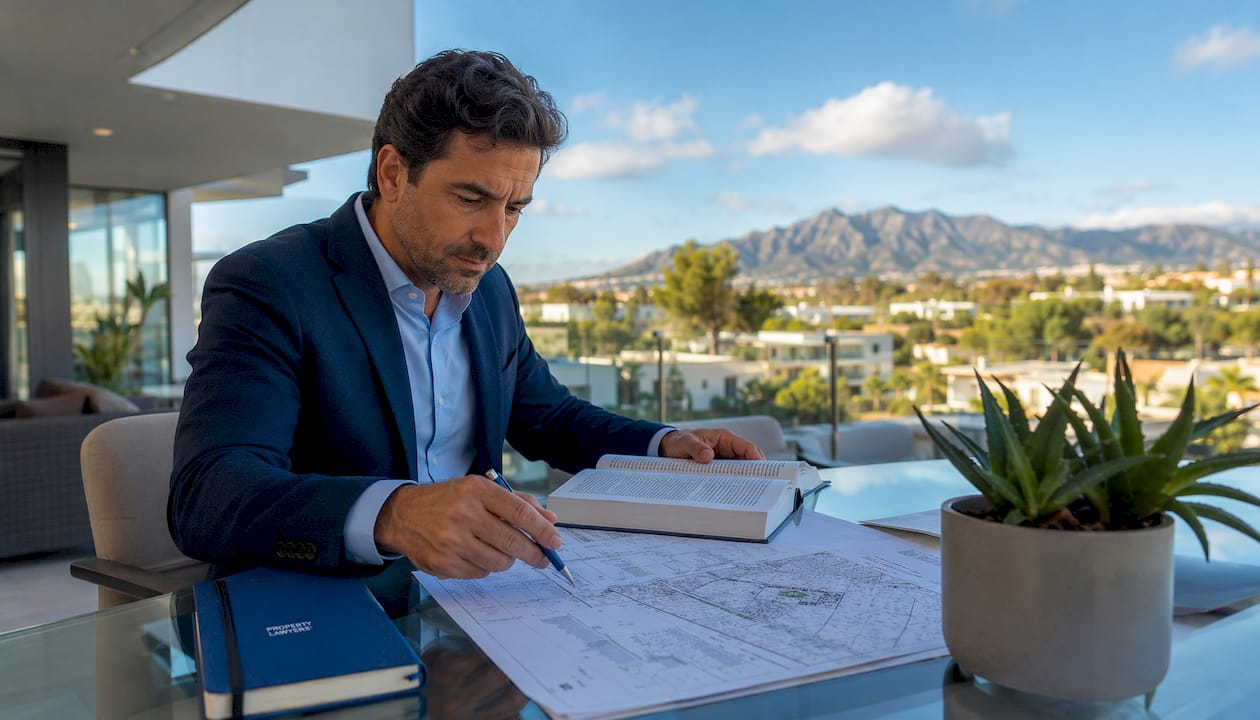
Resolve boundary disputes in Spain: what international owners need to do
TL;DR:
- When facing a boundary dispute in Spain, immediately secure a certified surveyor, stop modifications on the site, and instruct an English-speaking property lawyer to negotiate. Spanish law offers remedies like reivindicatory and boundary demarcation actions, which require strong technical evidence and a clear legal strategy. Timely legal advice and independent surveys are crucial to resolving disputes efficiently and avoiding lengthy court proceedings.
When a boundary dispute appears on your Spanish property, the safest first move is to pause any pending registration changes, commission an independent certified surveyor (a perito topógrafo), and instruct an English-speaking Spanish property lawyer to open negotiations. Those three steps protect your legal position while keeping the door open to an out-of-court settlement. The Spanish Civil Code (Código Civil), the Registro de la Propiedad (Land Registry) and the Catastro (Spanish Cadastre) are the three pillars of any boundary dispute resolution under Spanish property law, and understanding how they interact is what separates a swift resolution from years of litigation.
Table of Contents
- What legal tools does Spanish law give you to resolve a boundary dispute?
- How does a boundary dispute normally progress in Spain?
- What evidence and technical reports does a Spanish court actually want?
- How long does it take and what does it cost?
- Do regional rules in Spain affect how you resolve a boundary dispute?
- When should you instruct an English-speaking Spanish property lawyer?
- Practical checklist before you escalate a dispute
- Key takeaways
- How Property-lawyers.com helps you find the right specialist
- FAQ
Your first 72 hours: immediate steps to protect your position
Act on these in order:
- Do not alter the site. Do not move fences, remove markers, or carry out any construction near the disputed boundary.
- Photograph everything. Date-stamped photos of the boundary, any encroachment, and existing markers are admissible evidence.
- Order a nota simple from the Registro de la Propiedad and a Catastro extract for your property and the neighbour’s parcel.
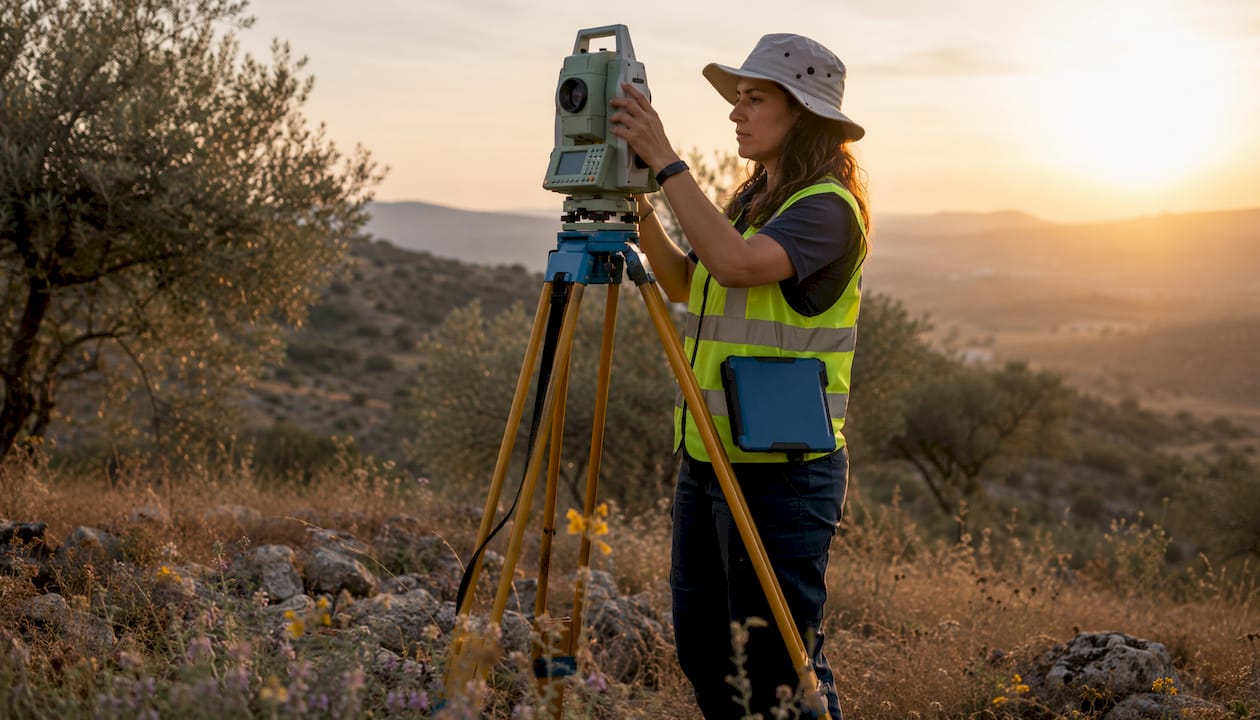
- Commission a topographic survey from a certified perito topógrafo as soon as possible. Courts rely heavily on independent technical reports prepared by qualified surveyors.
- Instruct a local English-speaking lawyer to send a formal but measured letter of claim before any direct confrontation with your neighbour.
- Check your due diligence file. If you have not already done so, review your property buying checklist to confirm all title documents are in order.
Property-lawyers.com connects international owners with vetted, English-speaking Spanish property lawyers across Marbella, Mallorca, Ibiza, Málaga and Barcelona who can advise on the right legal route from day one.
What legal tools does Spanish law give you to resolve a boundary dispute?
Spanish law provides several distinct remedies for land ownership disputes. Choosing the right one early saves time and money.
The five main legal actions

Acción reivindicatoria (reivindicatory action) is the standard remedy when a neighbour physically occupies part of your registered land without right. Under Article 348 of the Spanish Civil Code, you must prove three things: that you own the land, that the other party is in possession of it, and that the disputed area can be clearly identified. Courts expect your title deed (escritura), a nota simple from the Registry, and a topographic expert report (peritaje topográfico) as central evidence.
Deslinde (boundary demarcation action) is used when the physical boundary between two properties is unclear or has never been formally established. It does not require proof of encroachment; it simply asks the court to fix the line. This is often the right tool when Catastro records and Registry descriptions give conflicting measurements.
Acción negatoria (negatory action) applies when someone claims a right over your land that does not exist, such as an easement or right of way. You use it to have that claim declared void and removed from the Registry.
Declaratory actions cover situations where you need a court to confirm ownership or clarify the legal status of a boundary without seeking physical recovery of land. They are useful when there is a double registration or a conflict between two title deeds.
Usucapión (prescriptive acquisition) is the adverse possession route. Under Spanish law, a person who has possessed land openly, peacefully, and continuously for the required period may acquire title. The periods differ depending on whether possession is in good faith and whether the claimant has a title document. This is a defence as much as a claim, and it is one reason why boundary disputes commonly arise from long-standing occupation patterns that were never formally recorded.
Catastro versus Registro de la Propiedad: a critical distinction
Many international buyers assume the Catastro proves ownership. It does not. The Catastro is an administrative tax register maintained for fiscal purposes. The Registro de la Propiedad is the legal title register, and its entries are protected by the courts. When the two conflict, courts defer to the Registry evidence and judicially ordered technical surveys. A Catastro extract is useful evidence of historical boundaries, but it will not win a case on its own.
| Legal action | Purpose | Legal basis | Key evidence required |
|---|---|---|---|
| Acción reivindicatoria | Recover possession of occupied land | Art. 348 Código Civil | Escritura, nota simple, peritaje topográfico |
| Deslinde | Fix an unclear boundary line | Arts. 384–387 Código Civil | Topographic survey, historic plans, Registry data |
| Acción negatoria | Extinguish a false right over your land | Art. 348 Código Civil | Registry inscription, survey, proof of no right granted |
| Declaratory action | Confirm ownership or resolve double registration | Civil Procedure Law | Title deeds, Registry extracts, chain of possession |
| Usucapión | Acquire or defend title by long possession | Arts. 1940–1960 Código Civil | Witness statements, dated photos, utility records, possession history |
How does a boundary dispute normally progress in Spain?
Most disputes follow a predictable sequence. Knowing the stages helps you decide when to push for settlement and when to prepare for court.
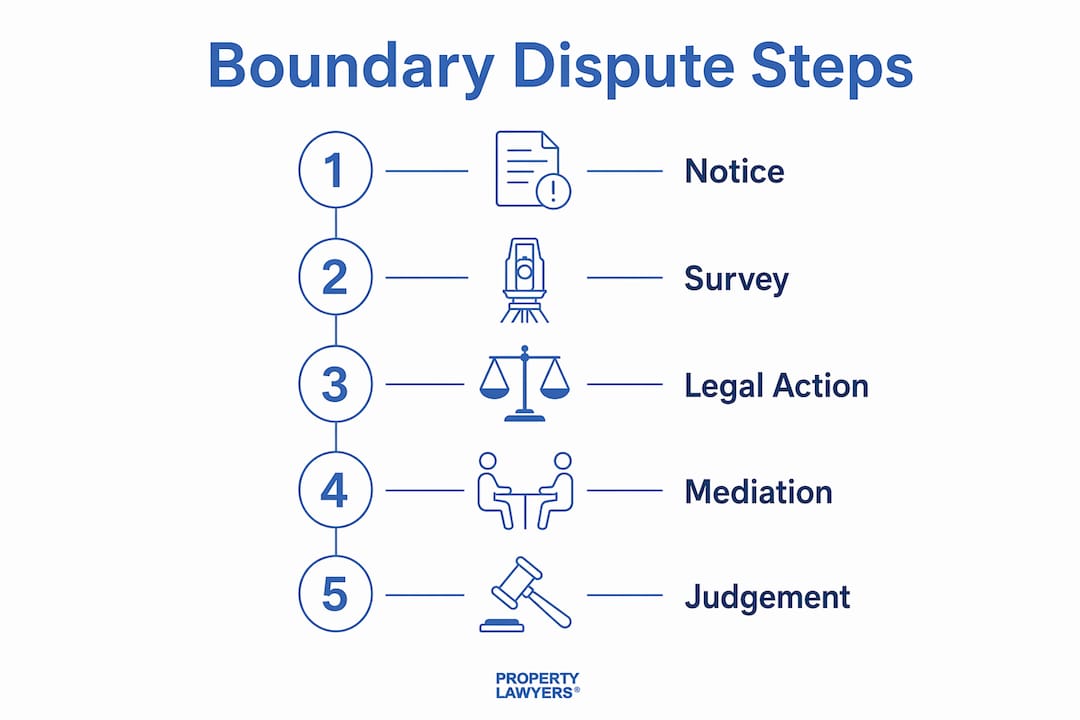
Step-by-step from discovery to resolution
- Check your land documents. Pull the nota simple, Catastro extract, and original escritura. Compare the described boundaries with what exists on the ground.
- Commission an independent topographic survey. This is the single most important preparatory step. An early, high-quality report prepared to judicial standard can materially reduce delay and increase the prospects of settlement.
- Instruct a lawyer to send a formal demand letter. For straightforward encroachment cases, a well-evidenced demand letter including survey evidence and the legal basis frequently encourages voluntary correction or settlement within weeks.
- Attempt mediation or conciliation. Mediation commonly runs 2–6 months and can produce creative settlements formalised before a notary. It is faster, cheaper, and preserves the neighbour relationship.
- Try the voluntary registry route (Article 199 LH). If the dispute relates to georeferencing your property on the Registry, your lawyer can apply under Article 199 of the Ley Hipotecaria to update the registered boundary. However, if your neighbour files a conflicting topographic plan signed by a qualified technician, the Registry will suspend the process. A judicial claim then becomes the only route to unblock registration.
- File a civil claim before the Court of First Instance. If negotiation and mediation fail, your lawyer files a demanda before the relevant court. The judge will typically appoint a judicial expert (perito judicial) and hear both parties’ technical evidence before issuing judgment.
Key procedural points to keep in mind
- Registry suspension under Article 199 LH is not a defeat. It is a signal that the dispute is genuinely contested and that judicial action is needed.
- Negotiation and mediation before litigation is consistently the recommended first step, and Spanish practice reflects the same logic.
- Usucapión defences have strict time limits. If a neighbour is claiming adverse possession, your lawyer must respond promptly to avoid losing procedural rights.
Pro Tip: Do not wait for a neighbour to file a formal claim before instructing a lawyer. The moment you notice a physical encroachment or receive a letter questioning your boundary, seek legal advice. Early instruction almost always reduces total cost.
What evidence and technical reports does a Spanish court actually want?
Spanish courts place significant weight on technical evidence. A well-prepared peritaje topográfico often decides the outcome before the hearing even begins.
The documents you need to gather
Start assembling this file the moment a dispute arises:
- Nota simple from the Registro de la Propiedad (confirms registered ownership, boundaries, and any charges)
- Catastro extract for your parcel and the neighbouring parcel
- Title deed (escritura) with any annexed plans
- Notarial plans from the original purchase or any subsequent boundary agreements
- Historic planos from the municipal archive or the original developer
- Dated photographs of the boundary, markers, fences, and any encroachment
- Witness statements from neighbours, former owners, or local residents who can speak to historical use
- Topographic survey (plano topográfico) signed by a certified perito topógrafo, georeferenced and clearly labelling the disputed parcels
The Catastro extract and historic plans provide context. The topographic survey is what courts and registrars rely on when the two sides disagree.
How to brief your surveyor effectively
When you instruct a perito topógrafo, be specific. Ask for:
- Full georeferencing of your parcel using GPS coordinates compatible with the Spanish National Reference System (ETRS89).
- Clear labelling of the disputed boundary segment and the area in question.
- A comparison between the registered description, the Catastro data, and the physical measurements on the ground.
- A chain of custody record for all plans and measurements.
- A report formatted for judicial use, with numbered paragraphs and a signed declaration of independence.
Pro Tip: If you are based in the UK and managing this remotely, ask your lawyer to arrange a bilingual summary of the surveyor’s report. Courts accept Spanish-language reports, but you need to understand the findings to give proper instructions. A power of attorney allows your lawyer to commission the survey and sign documents on your behalf.
How long does it take and what does it cost?
Realistic expectations on timing and cost help you weigh the options before committing to a particular route.
Typical timelines
| Route | Typical duration | Notes |
|---|---|---|
| Negotiation with demand letter | Days to 3 months | Fastest route; depends on neighbour’s willingness |
| Mediation | 2–6 months | Structured process; can produce a notarised settlement |
| Article 199 LH registry route (uncontested) | 3–6 months | Only works if no technical opposition is filed |
| Article 199 LH blocked by opposition | 12 months added | Forces a judicial route to unblock registration |
| Civil Court of First Instance litigation | 12 months | Varies significantly by region and court workload |
What drives the cost
- Surveyor fees (perito topógrafo): Vary by property size and complexity. An independent survey is usually the most cost-effective investment you can make early in the process.
- Lawyer fees (abogado): Most Spanish property lawyers charge either a fixed fee for demand letters and registry work or an hourly rate for litigation. Ask for a written fee estimate at the outset.
- Procurador fees: A procurador (court representative) is required for litigation. Fees are regulated and typically modest relative to total legal costs.
- Judicial expert (perito judicial): If the court appoints its own expert, both parties usually share the cost. This is separate from your own surveyor.
- Court fees (tasas judiciales): Generally applicable to corporate claimants; individual owners are often exempt or pay reduced rates.
After a successful judgment, the losing party may be ordered to pay the winner’s legal costs, but this is not automatic. Mediation avoids this uncertainty and often produces a faster, cheaper outcome for both sides.
Do regional rules in Spain affect how you resolve a boundary dispute?
Spain’s autonomous communities have their own planning rules and local registry practices, and these can add real complexity to what looks like a straightforward dispute.
- Catalonia operates under its own civil code (Codi Civil de Catalunya), which interacts with national land and registry law in ways that can alter strategy and timing. Regional rules may change how rights are exercised and what municipal approvals or Catastro treatments apply. In Barcelona, registry practice can be slower and more formal than in other regions.
- Balearic Islands (Mallorca, Ibiza) have specific urban planning legislation and a high proportion of rural land with historically imprecise boundaries. Georeferencing disputes on agricultural or coastal parcels in Mallorca and Ibiza frequently involve overlapping Catastro records that were never reconciled with the Registry. Local registry offices here are experienced with these issues, but the process takes longer than on the mainland.
- Andalusia (Marbella, Málaga) has a large volume of international property transactions and a well-developed network of English-speaking lawyers and surveyors. That said, coastal development pressure means boundary disputes in Marbella and the Costa del Sol often involve planning permissions and municipal boundary records as well as Registry data.
- Red flags that require immediate legal instruction in any region: a neighbour who has already filed a technical plan with the Registry, a planning application that encroaches on your land, or a developer who has built across a registered boundary.
Regional legal expertise can materially change both strategy and timing. An English-speaking lawyer based in your target region is not a luxury; it is a practical necessity.
When should you instruct an English-speaking Spanish property lawyer?
The short answer: earlier than you think.
Triggers for immediate instruction
- You notice a fence, wall, or structure that appears to encroach on your registered land.
- You receive a letter from a neighbour or their lawyer questioning your boundary.
- The Registro de la Propiedad suspends your Article 199 LH georeferencing application.
- A neighbour has submitted a competing topographic plan to the Registry.
- You discover a discrepancy between your escritura measurements and the Catastro data.
- You are buying a property and the due diligence reveals a boundary inconsistency.
What your lawyer will do
- Review your title documents, nota simple, and Catastro extract to identify the legal basis for your claim.
- Instruct a certified perito topógrafo and brief them on the judicial standard required.
- Draft and send a formal demand letter to the neighbour or their lawyer.
- Negotiate directly or represent you in mediation proceedings.
- Prepare the judicial claim (demanda) if court action becomes necessary.
- Represent you before the Civil Court of First Instance and manage any Registry follow-up after judgment.
Questions to ask when choosing your lawyer
- Do you have experience with boundary disputes specifically (not just general conveyancing)?
- Which regions do you cover, and do you have a network of trusted peritos topógrafos?
- Can you provide a written fee estimate for each stage?
- What is your honest assessment of the strength of my position?
- How long do you expect the process to take in this region?
Property-lawyers.com connects international owners with vetted, English-speaking specialists across Spain’s main property markets. Profiles are filtered by region so you can find counsel who knows the local registry and court practice.
Practical checklist before you escalate a dispute
This checklist is designed for UK and international owners who want to prepare thoroughly before instructing formal proceedings or entering mediation.
Documents to gather first
- Title deed (escritura) with all annexed plans and measurements.
- Nota simple from the Registro de la Propiedad (order online via the Registry portal).
- Catastro extract for your parcel and the adjacent parcel (available free at sede.catastro.gob.es).
- Any previous boundary agreements, notarial deeds, or correspondence with neighbours.
- Historic aerial photographs or municipal plans if available.
- Dated photographs of the current boundary, markers, and any disputed structures.
- Witness statements from people with direct knowledge of historical use.
Negotiation items to propose in mediation
- Formal re-marking of the boundary by a jointly appointed perito topógrafo.
- A limited licence to occupy a small disputed strip in exchange for a one-off payment.
- A boundary adjustment formalised by notarial deed, with the agreed georeferenced plan annexed.
- Compensation for any encroachment that has already occurred.
Once both parties reach agreement, formalise it before a notary. A notarised settlement can unblock an Article 199 LH registration that was suspended due to technical opposition, provided both parties’ technical annexes are included in the deed. This is often the fastest route to a clean Registry entry after a contested georeferencing process.
Pro Tip: When drafting a notarial settlement, ask your lawyer to include a clause confirming the agreed georeferenced plan as a binding annex to the deed. This single clause prevents the same dispute from resurfacing when either property is sold. For guidance on the notarisation process itself, the real estate closing document notarisation guide provides useful background on document formalities.
Key takeaways
Resolving a boundary dispute in Spain requires an independent topographic survey, a clear legal strategy under the Spanish Civil Code, and an English-speaking local lawyer instructed before the dispute escalates to court.
| Point | Details |
|---|---|
| Act within 72 hours | Photograph the site, order a nota simple, and pause any registration changes immediately. |
| Commission a perito topógrafo | Courts rely on independent technical reports; an early, high-quality survey often determines the outcome. |
| Mediation saves time and money | Mediation commonly runs several months and can produce a binding notarised settlement without litigation. |
| Article 199 LH can be blocked | A neighbour’s competing technical plan suspends registry georeferencing and forces a judicial route. |
| Property-lawyers.com | Connects international owners with vetted, English-speaking Spanish property lawyers filtered by region. |
Why local English-speaking counsel makes the real difference
The cases that go badly for international owners in Spain are rarely the ones with the weakest legal position. They are the ones where the owner waited too long, relied on a Catastro extract as proof of ownership, or instructed a lawyer without specific boundary dispute experience in the relevant region. The Spanish legal system is well-structured and the remedies are clear, but the procedural details, particularly around Article 199 LH georeferencing and the interaction between Catastro and Registry records, genuinely require local expertise to navigate efficiently.
Property-lawyers.com was built specifically to address this gap. The directory connects international buyers and owners with independent, English-speaking lawyers who practise in the regions where disputes actually arise: Marbella, Mallorca, Ibiza, Málaga and Barcelona. These are not generalist solicitors; they are specialists who work with trusted perito topógrafo networks and know the local registry practice.
How Property-lawyers.com helps you find the right specialist
Finding a vetted, English-speaking Spanish property lawyer used to mean asking around or relying on a developer’s recommendation. Property-lawyers.com offers a more reliable route.
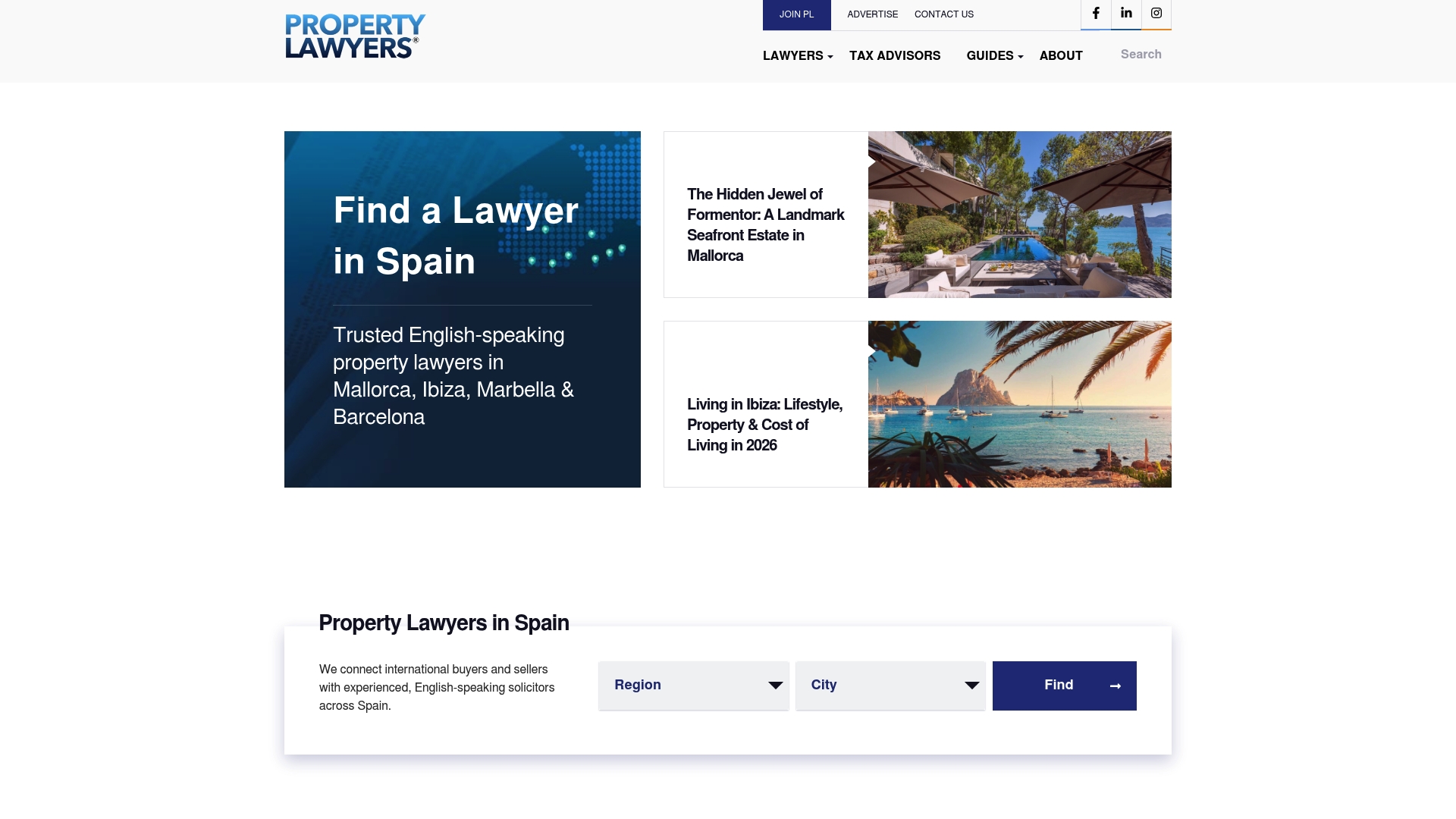
The directory lists independent lawyers filtered by region across Spain’s main property markets. Each profile covers their areas of practice, languages spoken, and contact details. For boundary disputes specifically, you can find lawyers with experience in reivindicatory actions, deslinde proceedings, Article 199 LH georeferencing, and mediation, alongside connections to certified peritos topógrafos in their region.
When you contact a lawyer through the platform, you can expect an initial review of your documents, a written fee estimate, and a clear explanation of the likely strategy and timeline for your situation. For UK owners managing a dispute remotely, many of these lawyers also handle power of attorney arrangements so you can authorise them to act on your behalf without travelling to Spain for every step.
For a broader understanding of your legal position as a property owner in Spain, the Spanish real estate law buyer’s guide covers the full legal framework. When you are ready to find a specialist for your region, search the Property-lawyers.com directory to connect with a vetted local lawyer today.
This article provides general information about Spanish property law and is not a substitute for professional legal advice. Always confirm the current rules and your specific position with a qualified Spanish property lawyer.
Useful sources and further reading
Primary legal and official sources to consult alongside your lawyer:
- Spanish Civil Code (Código Civil): Articles 348, 384–387 (boundary demarcation), and Articles 1940–1960 (usucapión / prescriptive acquisition). Available at boe.es.
- Ley Hipotecaria, Article 199: The georeferencing registration procedure and the grounds for suspension when a neighbour files a technical objection.
- Registro de la Propiedad: Order a nota simple online via the European e-Justice Portal land registers page or directly at registradores.org.
- Catastro: Download your parcel extract free at sede.catastro.gob.es.
- Article 199 LH georeferencing suspension (2026): cambioslegales.es explains the April 2026 resolution confirming that a neighbour’s technical plan suspends registration and forces a judicial route.
- Property boundary disputes overview: reuterssolicitors.com and lawants.com provide practical English-language summaries of the main Spanish remedies.
- Regional legal complexity: Deloitte Real Estate Law in Spain covers autonomous community variations.
- Why property boundaries matter in Spain: Property-lawyers.com boundary guide for practical context on Registry and Catastro checks.
Suggested search queries for your own research:
- “nota simple online Registro de la Propiedad [your province]”
- “perito topógrafo colegiado [Marbella / Mallorca / Ibiza / Málaga / Barcelona]”
- “abogado inglés disputas de linderos [your region]”
- “Article 199 Ley Hipotecaria georeferenciación oposición vecino”
FAQ
How do you resolve a boundary line dispute in Spain?
The standard route is to commission an independent topographic survey, instruct an English-speaking Spanish property lawyer to send a formal demand letter, and attempt mediation before filing a civil claim. If the neighbour files a competing technical plan with the Registry under Article 199 LH, a judicial boundary determination before the Court of First Instance becomes necessary.
What is the 12-year rule for boundary disputes in Spain?
Spain does not apply a single universal 12-year rule. Prescriptive acquisition (usucapión) periods under the Spanish Civil Code vary: ordinary usucapión requires good faith and a valid title, while extraordinary usucapión (without title) requires longer continuous possession. The applicable period depends on the specific circumstances, so always confirm the relevant timeframe with a qualified Spanish property lawyer for your case.
How can a boundary dispute be resolved without going to court?
Negotiation and mediation are the preferred first steps. A well-evidenced lawyer’s demand letter often resolves straightforward encroachment cases quickly, and mediation commonly produces a binding notarised settlement within 2–6 months. Court action is a last resort because of the time and cost involved.
What are the main types of boundary dispute in Spain?
The four main types are: cadastral mismatches (where Catastro and Registry records conflict), physical encroachment (a neighbour’s structure crosses your registered boundary), adverse possession claims (usucapión), and double registration (two title deeds covering the same land). Each requires a different legal remedy under Spanish property law.
When should a UK owner instruct a Spanish property lawyer for a boundary dispute?
Instruct a lawyer as soon as you notice a physical encroachment, receive a letter questioning your boundary, or discover a discrepancy between your title deed and the Catastro data. Property-lawyers.com lists vetted, English-speaking specialists by region across Spain’s main property markets, including Marbella, Mallorca, Ibiza, Málaga and Barcelona.
Recommended
- Why property boundaries matter in Spain: 2026 guide
- Property law in Spain: a 2026 guide for buyers
- Selling Property in Spain — Complete Legal Guide for Foreign Owners | Property Lawyers
- Real Estate Lawyers in Spain | Find the best property solicitors in Mallorca & Ibiza

Sophie Gutenberg is a legal content specialist focused on Spanish property law, real estate transactions, conveyancing, due diligence and tax issues affecting international property buyers in Spain. She works alongside qualified Spanish property lawyers .
