
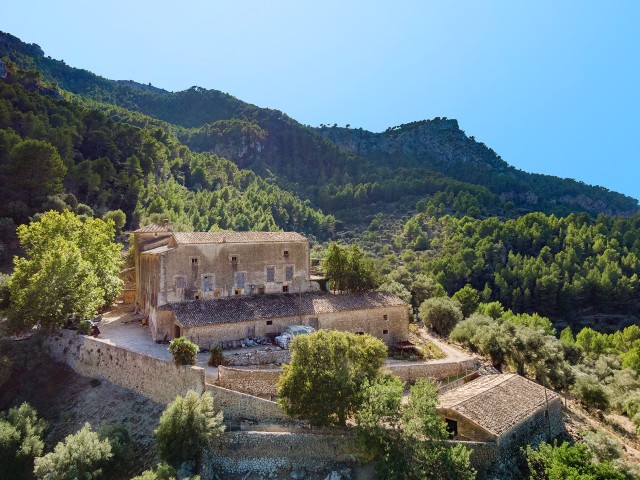
Rural property legal issues in Spain: types explained
Rural property legal issues in Spain are defined primarily by land classification, and understanding the difference between suelo rústico, suelo urbano, and urbanizable land is the single most important step before signing any contract. Many buyers discover too late that the charming farmhouse they purchased sits on land where residential construction was never legally permitted. The rural property legal issues Spain types framework governs everything from building rights and water access to mortgage eligibility and resale value. This guide breaks down each classification, the legal risks attached, and the due diligence steps that protect your investment.
1. What are the main types of rural land classification in Spain?
Spain’s land law divides all territory into three principal categories, and each carries distinct legal consequences for buyers.
- Suelo rústico (rural or non-developable land): This is the most common classification for countryside properties. It is designated primarily for agriculture, forestry, or environmental protection. Building rights are severely limited, with residential construction requiring a special authorisation known as an actuación de interés público, which is difficult to obtain.
- Suelo urbano (urban land): Land with existing infrastructure, services, and planning approval. Properties here carry full building rights subject to local planning rules.
- Suelo urbanizable (developable land): Land earmarked for future urban development. It may currently look rural but carries different legal rights and obligations than true suelo rústico.
Beyond these legal categories, marketing terms like cortijo, finca rústica, and casa de campo describe architectural styles or property types, not legal classifications. These terms are not interchangeable with land use designations. A cortijo can sit on suelo rústico or suelo urbano depending on its location and history. The official registered term for rural land is finca rústica, and this is what appears in the Land Registry. Confusing marketing descriptions with legal status is one of the most common and costly mistakes buyers make.
2. Registry discrepancies and what they signal
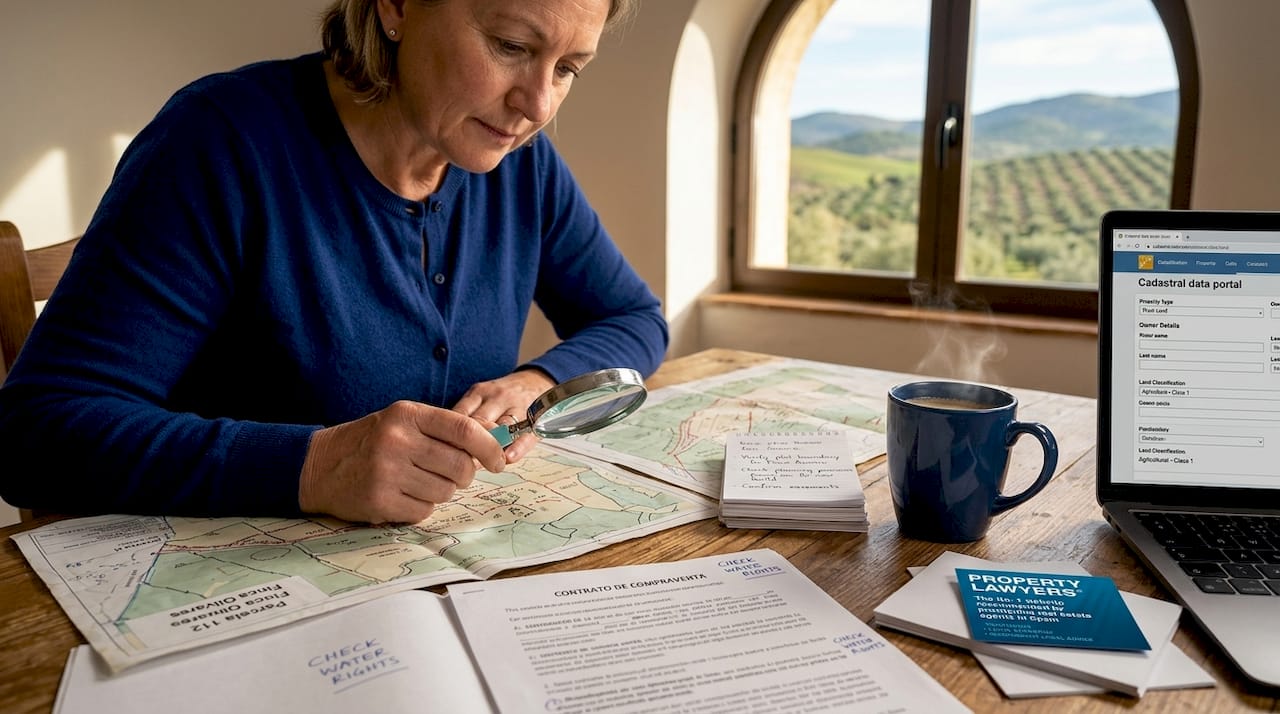
Discrepancies between the Land Registry (Registro de la Propiedad) and the Cadastre (Catastro) are common in rural properties and frequently indicate unregistered or illegal structures. These mismatches signal illegal extensions, unregistered swimming pools, or outbuildings built without licences. Each of these carries enforcement and resale risk.
Cross-checking physical structures against both sets of records is the primary tool for identifying problems before purchase. A building that appears on the ground but not in either registry is a serious red flag. Conversely, a structure registered in the Cadastre but absent from the Land Registry may indicate it was never formally declared, which affects title clarity and mortgage eligibility.
Physical presence of buildings does not guarantee legality. Many rural houses across Spain were constructed without full licences, requiring costly and lengthy regularisation processes after the fact. Buyers who proceed without checking both registries risk inheriting these problems entirely.
3. DAFO and AFO regularisation: what it covers and what it does not
The DAFO (Declaración de Asimilado Fuera de Ordenación) and AFO (Asimilado Fuera de Ordenación) processes in Andalucía allow certain older illegal rural buildings to obtain a form of administrative recognition. DAFO/AFO regularisation requires buildings to be over six years old with no active enforcement proceedings, and it grants limited legal status rather than a full building licence.
This distinction matters enormously. Even with an AFO in place, the property cannot be expanded or substantially altered without a full building licence, which is nearly impossible to obtain on suelo rústico for residential use. The AFO is a legal middle ground, not a clean slate.
Active demolition or enclosure proceedings block AFO/DAFO regularisation regardless of how old the building is. This makes checking enforcement status before purchase absolutely critical. The relevant document is the Certificado de no expediente, obtained from the local town hall, which confirms no active urban planning discipline proceedings are underway.
- Confirm the building is over six years old with documentary evidence
- Verify no active enforcement proceedings via the Certificado de no expediente
- Understand that AFO status restricts future extensions and major renovations
- Note that regional variation exists: some municipalities, including Monda in Málaga province, have significant processing delays for AFO applications
Pro Tip: Request the Certificado de no expediente directly from the town hall before making any offer. Sellers are not always aware of active proceedings against their property, and agents are not legally required to disclose them.
4. Legal rights for rural property buyers: access, water, and utilities
Legal rights to access roads and water sources are often informal on rural properties and require explicit verification during due diligence. Wells must hold permits from the Confederación Hidrográfica relevant to the region, and access roads need registered easements. Informal arrangements that have existed for decades carry no legal protection and can be challenged by neighbouring landowners or new owners.
Key checks for rural property buyers include:
- Access roads: Confirm a registered right of way (servidumbre de paso) exists in the Land Registry. A track used informally for years is not a legal right.
- Water supply: Verify whether the property connects to mains water or relies on a well. If a well, confirm it holds a valid permit from the relevant Confederación Hidrográfica del Sur or equivalent body.
- Electricity and utilities: Many rural properties have informal or temporary connections. Confirm the supply is legal and metered correctly.
- Boundary verification: Cross-reference the physical boundaries with the official Cadastral map. Rural plots frequently have discrepancies between what is fenced and what is legally owned.
Rural property carries risks that urban properties do not, because planning restrictions and subsurface rights cannot be assumed from existing structures. Legal verification of each of these rights is not optional.
Pro Tip: Ask your lawyer to obtain a Nota Simple from the Land Registry and compare it against the Catastro reference map. Discrepancies in surface area or boundary descriptions often reveal unregistered structures or disputed land.
5. Comparison of rural property types and their legal risks
The table below compares the three most commonly marketed rural property types in Spain from a legal and practical standpoint.
| Property type | Legal classification | Typical legal risks | Building/renovation rights | Mortgage eligibility |
|---|---|---|---|---|
| Finca rústica | Suelo rústico (official term) | Unlicensed structures, access disputes, water permit issues | Very limited; agricultural use only without special authorisation | Difficult without AFO/DAFO; lenders require regularisation documentation |
| Cortijo | Varies: suelo rústico or suelo urbano | Misclassification risk; may carry AFO restrictions | Depends entirely on underlying land classification | Possible if on suelo urbano; restricted if on suelo rústico |
| Casa de campo | Usually suelo rústico or urbanizable | Informal utilities, boundary discrepancies, planning history gaps | Limited to existing footprint in most cases | Lenders like Unicaja and BBVA require AFO documentation for rural properties |
The core lesson from this comparison is that the marketing name tells you nothing about legal status. A cortijo presented as a charming rural retreat may carry full building rights if it sits on suelo urbano, or it may be an unregularised structure on suelo rústico with no mortgage available and no legal path to renovation. Always verify the underlying land classification before assessing any other aspect of the purchase.
6. Best practices for managing a rural land purchase legally in Spain
Managing a rural land purchase legally in Spain requires a structured approach to due diligence. The buyer’s independent lawyer handles legal due diligence that is essential for a safe purchase. The notary only certifies signatures and identity. This distinction is widely misunderstood by international buyers, and it is the reason why notaries do not perform due diligence on property legality.
Follow these steps before committing to any rural property purchase:
- Appoint an independent Spanish lawyer with specific experience in rural property law. A specialist property lawyer understands the regional variations in planning law that a general practitioner may miss.
- Obtain a Nota Simple from the Land Registry to confirm ownership, boundaries, and any charges or encumbrances registered against the property.
- Request the Catastro reference and compare it against the Nota Simple. Any discrepancy in surface area or structures requires explanation.
- Verify planning status by obtaining the Certificado de no expediente from the town hall, confirming no active enforcement proceedings.
- Check AFO/DAFO status if the property has any structures of uncertain legal origin. Understand what restrictions the status imposes before proceeding.
- Confirm water and access rights are formally registered, not merely informal arrangements.
- Assess mortgage feasibility early. Mortgage lending appetite for rural land depends heavily on whether the property holds AFO/DAFO status. Factoring regularisation into your financing strategy before signing a reservation contract avoids costly surprises.
Pro Tip: If you are purchasing remotely, a power of attorney allows your appointed lawyer to act on your behalf throughout the transaction, including signing at the notary. This is standard practice for international buyers and carries no additional legal risk when properly drafted.
Key takeaways
Rural-property risk is especially location-sensitive. Buyers can compare local guidance for Mallorca and rural property in Ibiza, or find lawyers covering Marbella and the Costa del Sol.
Rural property purchases in Spain carry legal risks that are directly tied to land classification type, and no amount of physical inspection replaces formal legal due diligence.
| Point | Details |
|---|---|
| Land classification governs everything | Suelo rústico severely restricts building rights; always verify the legal classification, not the marketing label. |
| Registry discrepancies signal risk | Mismatches between the Land Registry and Catastro frequently indicate unlicensed structures with enforcement and resale consequences. |
| AFO/DAFO has strict limits | Regularisation grants limited legal status only; extensions and major renovations remain prohibited on suelo rústico. |
| Access and water rights must be formal | Informal tracks and unregistered wells carry no legal protection and can be challenged after purchase. |
| Independent legal advice is non-negotiable | Notaries certify signatures; only an independent lawyer performs the due diligence that protects your purchase. |
What buying rural property in Spain has taught me
I have reviewed enough rural property transactions in Spain to say with confidence that the majority of problems buyers face were visible in the paperwork long before they signed. The issue is rarely a lack of information. It is a failure to ask for it, or to understand what it means when it arrives.
The most common mistake I see is buyers treating the AFO/DAFO process as a solution rather than a warning sign. A property that requires regularisation is a property that was built illegally. The AFO gives it a form of administrative tolerance, but it does not make it fully legal. Buyers who purchase on that basis and then discover they cannot extend, renovate, or easily resell are not victims of bad luck. They are victims of incomplete due diligence.
Regional variation is also underestimated. Planning law in Spain is devolved to the autonomous communities, and even within Andalucía, individual municipalities interpret and enforce the rules differently. What is straightforward in one town may be genuinely problematic in another. A lawyer who knows the specific municipality is worth considerably more than one who knows Spanish property law in general terms.
My honest advice: approach rural property in Spain with genuine optimism, because the opportunities are real. But treat every informal arrangement, every unregistered structure, and every marketing description as a question that needs a formal answer before you proceed.
— Sophie
How Property-lawyers can help you buy rural property safely
Buying rural property in Spain legally requires specialist legal support from the very start of the process, not just at the point of signing.

Property-lawyers connects international buyers with trusted, independent real estate lawyers in Spain who specialise in rural property transactions. The lawyers in the directory carry out full due diligence, including Nota Simple verification, Catastro cross-checks, planning status certificates, AFO/DAFO assessment, and contract review. They also advise on water rights, access easements, and mortgage documentation requirements. Whether you are purchasing a finca rústica in Andalucía or a casa de campo in Extremadura, Property-lawyers helps you find the right legal expert for your specific region and property type. Start your search at Property-lawyers.com.
FAQ
What is suelo rústico and can you build on it?
Suelo rústico is non-developable rural land designated primarily for agricultural or environmental use. Residential construction requires a special authorisation called an actuación de interés público, which is difficult to obtain and rarely granted.
What does AFO/DAFO mean for a rural property purchase?
AFO and DAFO are regularisation statuses in Andalucía that give limited administrative recognition to older illegal rural buildings. They do not grant full building licences and prohibit extensions or major renovations, but they can support mortgage applications with certain lenders.
Why are rural properties in Spain risky to buy?
Rural property buying is risky in Spain because planning restrictions, water rights, and access easements cannot be assumed from physical inspection. Many rural buildings were constructed without licences, and discrepancies between the Land Registry and Catastro frequently indicate unregistered or illegal structures.
What documents should I check before buying rural land in Spain?
Request a Nota Simple from the Land Registry, the Catastro reference map, the Certificado de no expediente from the town hall, and any existing AFO/DAFO documentation. Your independent lawyer should verify all of these before you sign a reservation contract.
Do I need a lawyer to buy rural property in Spain?
Yes. The notary only certifies signatures and identity. An independent lawyer performs the legal due diligence that protects your purchase, including title verification, planning status checks, and encumbrance searches.
Recommended
- Property in Spain: What about the military clearance? | Property Lawyers
- Escritura Spain — The Spanish Property Title Deed Explained | Property Lawyers
- Legalisation of Properties in Spain (including Mallorca) | Property Lawyers
- Property Taxes in Spain — Full Guide for Foreign Owners (2026) | Property Lawyers

Sophie Gutenberg is a legal content specialist focused on Spanish property law, real estate transactions, conveyancing, due diligence and tax issues affecting international property buyers in Spain. She works alongside qualified Spanish property lawyers .
