

Ocupación ilegal in Spain: what UK buyers need to know
Ocupación ilegal means occupying a property in Spain without a valid legal title or the owner’s consent. In plain English, it is squatting. Spanish law treats it as both a civil matter and, in some circumstances, a criminal one, and owners must follow judicial procedures to recover their property rather than act alone.
Three elements define it:
- No legal title: the occupant has no contract, deed, or right of ownership.
- No consent: the owner has not given permission, even informally.
- Permanence: the occupant is living in or using the property continuously.
For UK buyers and owners, the key risk is straightforward: if someone occupies your Spanish property without permission, you cannot simply remove them yourself. You need a court order, and the process takes time.
Pro Tip: If you discover your property has been occupied, photograph everything immediately, note the date, and contact the local police (Policía Nacional or Guardia Civil) the same day. Then instruct an English-speaking property lawyer as quickly as possible. Property-lawyers.com connects you with vetted local solicitors across Spain.
Table of Contents
- How does ocupación ilegal differ from a tenant dispute?
- What should you do if your property has been occupied?
- If you are occupying a property: what you need to know
- How UK buyers can protect themselves before purchasing
- Key takeaways
- Why the conventional wisdom on squatting in Spain misses the point
- Property-lawyers.com: find a Spanish property lawyer today
- Useful sources
- FAQ
How does ocupación ilegal differ from a tenant dispute?
This distinction matters enormously for choosing the right legal route.
| Situation | Legal category | Correct procedure |
|---|---|---|
| Person occupies with no contract, no consent | Ocupación ilegal (squatting) | Accelerated civil desahucio or criminal complaint |
| Tenant with lease stops paying rent | Inquiocupación (tenant default) | Standard rental eviction (desahucio por impago) |
| Person occupying with owner’s informal permission | Precario (tolerated occupation) | Ordinary civil claim to recover possession |
Spanish law treats these separately: a tenant who signed a lease and then stopped paying is not a squatter, even if they refuse to leave. Courts require different evidence and follow different procedures for each.
Two quick examples:
- You own a holiday apartment in Málaga. You return to find strangers living there with no contract. That is ocupación ilegal. File a police report and instruct a lawyer to begin the accelerated civil procedure.
- You rented your Marbella flat to a tenant who has not paid rent for four months and ignores notices. That is inquiocupación. You need a standard rental eviction, not a squatting claim.
Pro Tip: Ask your lawyer to check whether any document exists that could be interpreted as permission to occupy, such as an old email, a verbal agreement witnessed by others, or a utility bill in the occupant’s name. Courts look carefully at this evidence.
What should you do if your property has been occupied?
Act quickly. Evidence gathered in the first 48 hours often determines how smoothly the legal process runs.
- Instruct a property lawyer immediately. An English-speaking solicitor can file the accelerated civil desahucio claim on your behalf. Find one through Property-lawyers.com.
Pro Tip: The strongest evidence in court is a combination of dated photographs, a copy of your property title deed, meter readings showing you were the last registered user, and witness statements from neighbours. Keep all of this in a single folder.
If you cannot attend proceedings in person, a power of attorney allows your lawyer to act on your behalf throughout.
If you are occupying a property: what you need to know
Occupying a property without a legal title gives you no ownership rights and carries real legal risk. Spanish law does not recognise occupation as a route to housing tenure.
Immediate risks include:
- Eviction by court order, often with little notice under the accelerated procedure.
- Criminal charges for unlawful entry (allanamiento de morada) if the property was someone’s home.
- No right to compensation, tenancy protections, or deposit return.
- Difficulty accessing public services or registering at the address.
If you are in a vulnerable situation, the right route is through official channels. Contact your local council (ayuntamiento) or social services (servicios sociales) to apply for social housing or emergency assistance. Under Ley 5/2018, courts must notify social services before enforcing eviction where vulnerability is identified, giving authorities time to act.
Pro Tip: If you receive a court notice, seek free legal aid (turno de oficio) immediately. Do not ignore court documents. Engaging with the process, including consenting to social services contact, is always the better outcome.
How UK buyers can protect themselves before purchasing
Thorough legal due diligence before you buy is the most effective protection against purchasing a property affected by illegal occupation.
Key checks to carry out:
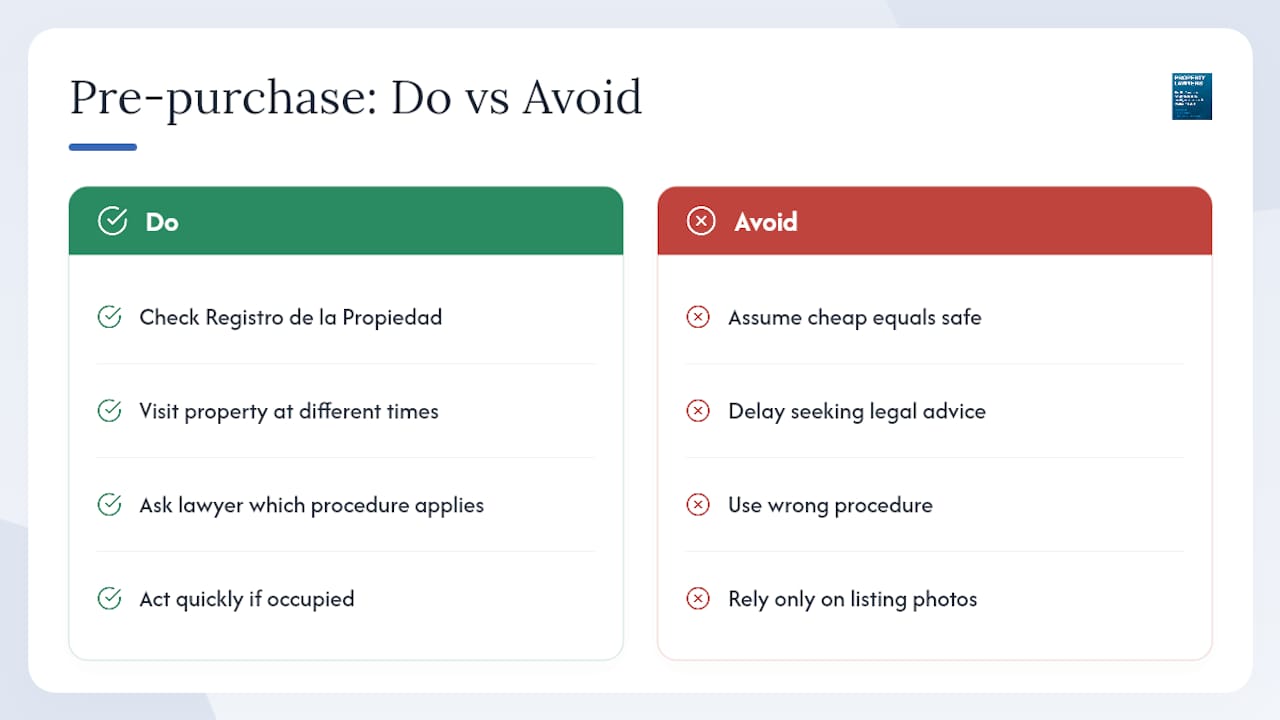
- Search the Registro de la Propiedad. Confirm the seller’s title and look for any precautionary measures, embargoes, or pending legal proceedings.
- Request a cédula de habitabilidad. This certificate of habitability confirms the property meets legal standards and is registered for residential use.
- Visit the property at different times. A single viewing can miss signs of occupation. Visit on different days and at different hours.
- Ask the seller directly. Request a written declaration that the property is vacant and free of any occupants or disputes.
- Include contractual protection. Ask your lawyer to add a clause requiring the seller to resolve any occupation before completion, with an escrow holdback or price reduction as a remedy.
Illegal occupation can delay completion, reduce valuations, and deter future buyers. For investment properties in high-demand areas such as Ibiza or Barcelona, even a rumoured dispute can affect resale confidence.
Pro Tip: Use Property-lawyers.com to find an English-speaking conveyancing solicitor in the region where you are buying. A local lawyer will know which areas carry higher occupation risk and can run all registry and dispute checks on your behalf.

Key takeaways
Ocupación ilegal in Spain means squatting without legal title or consent, and owners must use judicial procedures under Ley 5/2018 to recover possession.
| Point | Details |
|---|---|
| Definition | Ocupación ilegal is occupation without legal title or owner consent; it is not the same as a tenant dispute. |
| Legal routes | Both civil (accelerated desahucio) and criminal (usurpation or unlawful entry) routes may apply depending on circumstances. |
| Act fast | Document evidence, file a police report, and instruct a lawyer within the first 48 hours of discovering occupation. |
| Buyer protection | Run full registry checks, visit the property in person, and include contractual safeguards before exchanging contracts. |
| Find legal help | Property-lawyers.com connects UK buyers and owners with vetted, English-speaking property solicitors across Spain. |
Why the conventional wisdom on squatting in Spain misses the point
Most coverage of ocupación ilegal focuses on dramatic cases or political debate. What owners and buyers actually need is something more practical: a clear understanding of which legal route applies to their specific situation, and how quickly they need to move.
The distinction between true squatting and a tenant dispute is where most people go wrong. Instructing a lawyer for the wrong procedure wastes weeks and money. The 2018 reform was a genuine improvement for owners, but it only works well when the claim is correctly framed from the start.
For UK buyers, the real lesson is pre-purchase vigilance. A property that looks vacant and attractively priced may carry hidden occupation risk. A thorough check through the Registro de la Propiedad and a physical visit at different times costs very little compared to the legal fees and delays that follow a disputed purchase.
Spain’s property market remains one of the most attractive in Europe for international buyers. Understanding the legal framework, including occupation laws, is simply part of buying well.
Property-lawyers.com: find a Spanish property lawyer today
Dealing with an occupation dispute, or buying in Spain and want to avoid one? Property-lawyers.com is a directory of vetted, English-speaking property solicitors, covering every major region from Marbella and Málaga to Mallorca, Ibiza, and Barcelona.
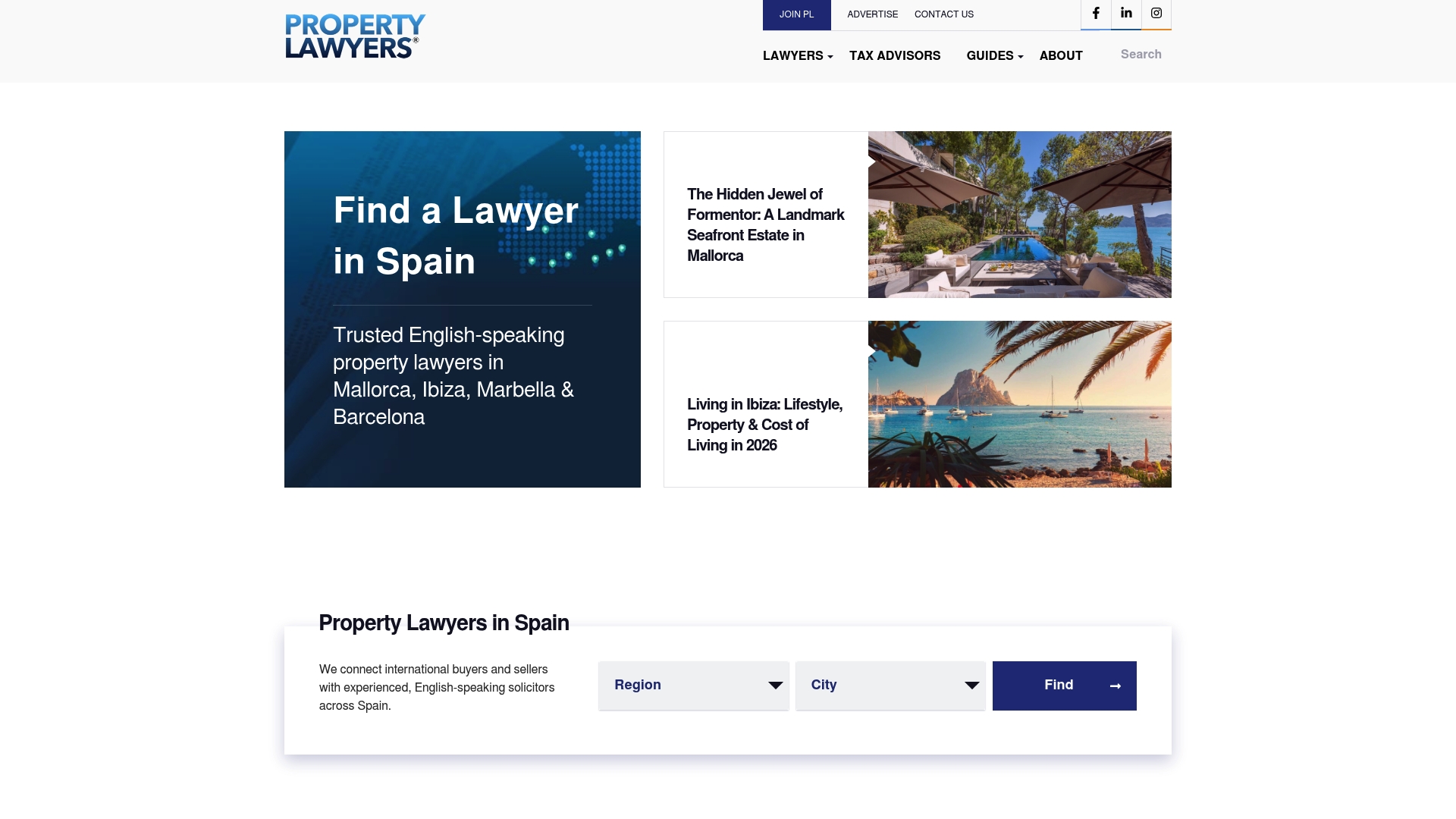
Every lawyer listed is independent, locally based, and experienced in Spanish property law, including conveyancing, due diligence, and eviction procedures. You can search by region, read profiles, and make direct contact without any obligation. For buyers, that means having a qualified local expert run all the checks before you commit. For owners facing occupation, it means fast access to someone who knows the local courts.
Browse the directory and connect with a Spanish property lawyer who can advise on your specific situation today.
This article is general information only and does not constitute legal advice. Always consult a qualified Spanish property solicitor for guidance on your specific circumstances.
Useful sources
- BOE-A-2018-7833 Ley 5/2018, de 11 de junio, de modificación de la Ley 1/2000, de 7 de enero, de Enjuiciamiento Civil, en relación a la ocupación ilegal de viviendas.
- What is considered an illegally occupied property in Spain?
- Desahucio por Ocupación Ilegal: Qué es y cómo funciona (2026)
- Measures Against the Illegal Occupation of Housing in Spain | JL Casajuana Abogados
- Ocupación ilegal | Glosario SEAG
- Squatting in Spain
- WordReference: ocupación ilegal de viviendas
Consult a qualified Spanish property solicitor for interpretation specific to your case.
FAQ
What does ocupación ilegal mean in Spain?
It means occupying a property without a valid legal title or the owner’s consent, commonly translated as squatting. Both civil and criminal legal routes may apply depending on whether the property was inhabited at the time of occupation.
How long does it take to evict a squatter in Spain?
Under the accelerated civil procedure introduced by Ley 5/2018, a court order can be obtained in a few months from filing, though enforcement and local court backlogs mean the full process often takes longer in practice.
Is ocupación ilegal the same as a tenant not paying rent?
No. A tenant with a lease who stops paying rent is classed as inquiocupación and requires a standard rental eviction. Ocupación ilegal applies only where there is no contract and no owner consent from the outset.
Can a UK buyer check for occupation risk before purchasing in Spain?
Yes. A search of the Registro de la Propiedad, a physical visit at different times, and a written declaration from the seller are the core checks. Property-lawyers.com can connect you with a local English-speaking solicitor to run full due diligence before you exchange contracts.
Can an owner remove squatters without a court order in Spain?
No. Attempting to remove occupants by force or cutting off utilities can expose the owner to criminal liability. The correct route is always through the judicial process, either via the accelerated civil procedure or a criminal complaint.
Recommended
- Gazumping in Spain: what property buyers must know
- Property law in Spain: a 2026 guide for buyers
- Spanish timeshare law explained: what UK buyers must know

Sophie Gutenberg is a legal content specialist focused on Spanish property law, real estate transactions, conveyancing, due diligence and tax issues affecting international property buyers in Spain. She works alongside qualified Spanish property lawyers .
