

How to buy off-plan property in Spain safely
Yes, international buyers can purchase off-plan property in Spain safely — but only when the right legal protections are in place. The single most important safeguard is an individualised bank guarantee (aval bancario) or surety insurance (seguro de caución) that covers 100% of every advance payment you make. Before releasing any funds, instruct an independent Spanish lawyer to confirm that guarantee exists, names you and your specific unit, and that the developer holds a valid building licence. Those two checks alone remove the majority of risk that has caught buyers out in the past. Foreign buyers are protected under Spanish law, but only when those protections are actively verified.
Table of Contents
- What are the real risks of buying off-plan in Spain?
- Spain-specific legal protections every buyer must verify
- Step-by-step: how the buying process works in practice
- Your due-diligence checklist before you sign or pay anything
- How an independent Spanish lawyer protects you — and how to find one
- Which professionals do you actually need?
- Is off-plan right for you? A clear verdict
- Key takeaways
- Why independent legal advice matters more than most buyers realise
- Property-lawyers: find your independent Spanish lawyer today
- Useful sources and where to verify what you are told
- FAQ
What are the real risks of buying off-plan in Spain?
Off-plan property investment in Spain carries genuine risks. Understanding them is what separates buyers who complete successfully from those who lose money.
Delivery delays are the most common problem. Construction timelines slip for many reasons: planning disputes, contractor issues, or material shortages. A contract without a fixed completion date and a penalty clause leaves you with no remedy beyond waiting.
Developer insolvency is the most serious risk. Spain has seen high-profile developer failures — most notably during the 2008–2012 property crisis, when thousands of buyers lost deposits because guarantees were either absent or not individualised. Without a valid bank guarantee, your advance payments sit in the developer’s general funds and become unsecured creditor claims if the company collapses.
Specification changes happen when developers substitute materials or alter layouts after the contract is signed. If the memoria de calidades is vague or the contract allows broad changes, you may receive a property that differs significantly from what you agreed to buy.
Regulatory and planning issues can delay or prevent the first-occupation licence, meaning you cannot legally move in or rent the property even after construction finishes.
Non-legal risks are also real: foreign exchange movements between sterling and the euro can add thousands to your effective cost, short-term rental licences are not automatically granted (regional rules vary significantly in areas like the Balearics and Barcelona), and developer renders often show idealised views that the finished building does not replicate. For a broader picture of common pitfalls when buying overseas property, the pattern of risks is consistent across markets.
Pro Tip: Never assume a rental licence comes with the property. In the Balearics, Catalonia, and parts of Andalusia, short-term rental licences are subject to strict regional caps. Confirm the position with your lawyer before you factor rental income into your investment case.
Spain-specific legal protections every buyer must verify
Spain’s legal framework for off-plan purchases is genuinely protective — when buyers enforce it. The key instrument is Law 38/1999 (Ley de Ordenación de la Edificación, or LOE), which requires developers to protect all advance payments with either a bank guarantee or surety insurance. These guarantees must be individualised (naming you and your specific unit), cover each payment milestone separately, and be presented to you before each transfer is made.
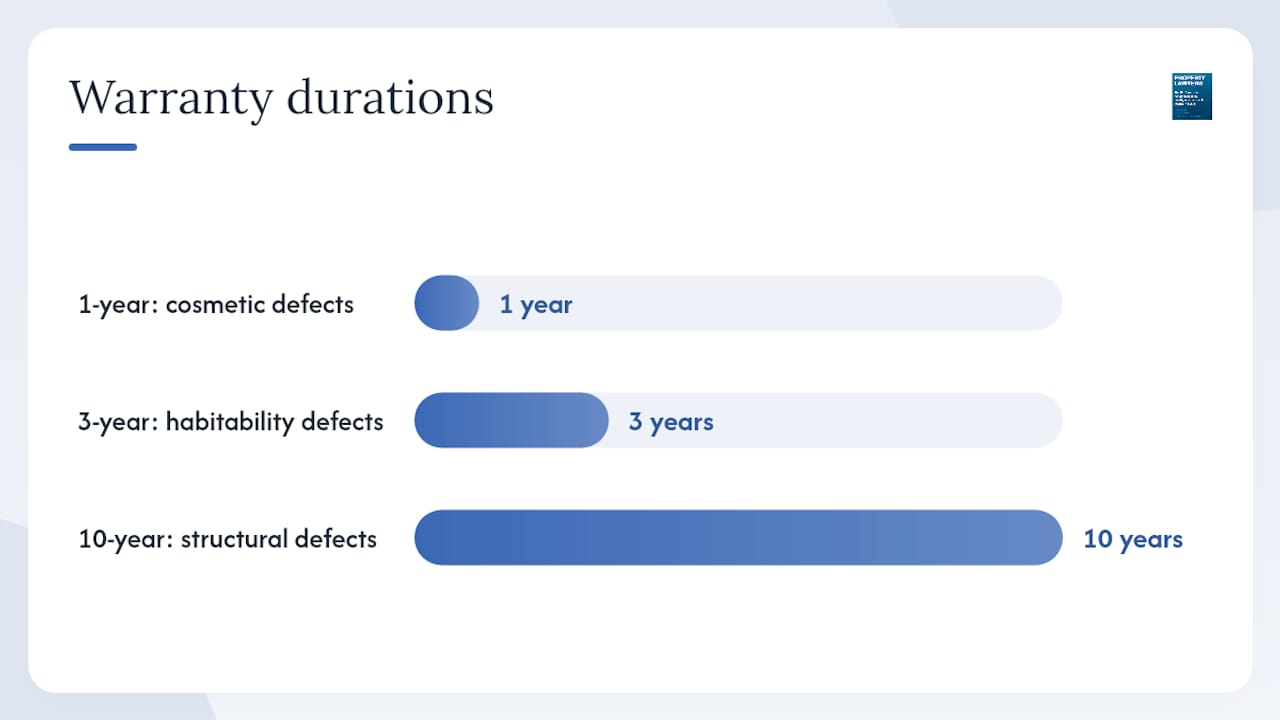
The three warranty layers under the LOE:
- 1-year warranty: Covers cosmetic and finishing defects (paintwork, tiling, fixtures).
- 3-year warranty: Covers habitability defects including plumbing, electrical installations, and insulation failures.
- 10-year structural warranty (seguro decenal): Covers structural defects in the foundations, load-bearing walls, and roof. This insurance is typically a precondition for registering the property at the land registry.
What to request from the developer before each payment:
- An individualised bank guarantee certificate naming you, your NIE number, and the specific unit reference.
- Confirmation that the guarantee covers the exact amount of that milestone payment plus legal interest.
- Proof that advance payments are held in a special segregated construction account (cuenta especial), separate from the developer’s operating funds.
- A copy of the current building licence before any payment beyond the reservation.
If a developer fails to complete, buyers have the right to rescind the contract and claim the return of all payments plus legal interest — the bank or insurer who issued the guarantee becomes the recovery route. Enforcement timelines vary by insurer, but the legal right is clear. For a deeper explanation of the structural guarantee specifically, see Spain’s 10-year structural guarantee for new-build property.
| Protection | What it covers | Who provides it | When to demand it |
|---|---|---|---|
| Bank guarantee / seguro de caución | 100% of each advance payment + legal interest | Developer’s bank or insurer | Before every staged payment |
| 1-year warranty | Cosmetic and finishing defects | Developer | At handover |
| 3-year warranty | Habitability, plumbing, electrics | Developer | At handover |
| 10-year seguro decenal | Structural defects | Insurance company | At registration |
| Special segregated account | Advance payments ring-fenced from developer funds | Developer’s bank | Before first payment |
Step-by-step: how the buying process works in practice
A realistic off-plan purchase in Spain takes 12–24 months from reservation to handover. Here is what happens at each stage and what you must check.
- Reservation (reserva): Pay €3,000–€10,000 to reserve the unit. Receive a reservation receipt. At this point, instruct your lawyer — do not wait until the private contract stage.
- Due diligence period: Your lawyer checks the building licence, the developer’s company registration, any embargoes on the land, and the draft private contract. This is the stage to negotiate contract amendments.
- Private contract (contrato privado): Sign only after your lawyer has reviewed and, where necessary, amended the contract. Confirm the memoria de calidades is attached and legally binding. Pay the first significant instalment — but only against a current, individualised guarantee certificate.
- Construction-stage payments: Each milestone payment (typically 10–20% of the purchase price per stage) must be accompanied by a refreshed guarantee certificate. A guarantee covering milestone two does not automatically extend to milestone three.
- Snagging inspection (repaso): Before signing the escritura, carry out a thorough inspection with a technical surveyor. Document every defect in writing. Consider retaining a small sum until the snagging list is resolved.
- Escritura pública (public deed): Signed before a notary. Your mortgage drawdown happens here. Your lawyer confirms all licences are in place, including the first-occupation licence, before you sign.
- Land registry: Your lawyer registers the escritura and the seguro decenal at the land registry, completing your legal ownership.
Key documents to hold at each stage:
- Reservation receipt and reservation contract
- Private purchase contract with attached memoria de calidades
- Individualised guarantee certificate for each payment
- Building licence (licencia de obra)
- Architect’s completion certificate (certificado final de obra)
- First-occupation licence (licencia de primera ocupación)
- Seguro decenal insurance policy
Your due-diligence checklist before you sign or pay anything
This is the practical core of buying off-plan in Spain safely. Work through these checks before committing funds at any stage. Spanish off-plan property law gives the full legal framework, but these are the actions that matter most day to day.
Priority checks:
- Confirm the building licence exists and is current before paying beyond the reservation.
- Verify the bank guarantee or seguro de caución is individualised, names you and your unit, and covers the exact payment amount.
- Read the memoria de calidades carefully. If a finish or fitting is not listed, the developer is not obliged to provide it.
- Research the developer: check their company registration, completed projects, and financial standing. Ask for references from previous buyers.
- Request proof of the special segregated account before the first staged payment.
Contract red flags to refuse:
- Open-ended completion dates with no long-stop and no penalty clause.
- Clauses allowing the developer to make “reasonable” or “equivalent” changes to the specification without your written consent.
- Guarantee language that covers the project collectively rather than your unit individually.
- Unilateral developer rights to cancel the contract and return only the reservation fee.
Developer contracts in Spain are routinely drafted to favour the developer. The most effective protection is negotiating a fixed completion date, a long-stop date, and automatic rescission rights if the long-stop is missed. Your lawyer should push for these as standard.
Pro Tip: If you are buying with a mortgage, do not simply subrogate the developer’s existing mortgage without comparing market offers. Non-resident mortgage rates and conditions vary significantly between lenders. A specialist non-resident mortgage broker can often secure better terms than the developer’s preferred bank.
How an independent Spanish lawyer protects you — and how to find one
An independent Spanish property lawyer is not optional for an off-plan purchase. Their role goes well beyond paperwork.
- Power of attorney: If you cannot travel to Spain for every stage, your lawyer can act on your behalf under a power of attorney, which is common for international buyers.
Typical legal fees for an off-plan purchase range from around 1% of the purchase price, though fixed-fee options for contract review and completion are available. Always confirm the scope of the fee quote in writing before instructing. For a clear breakdown of what to expect, see property lawyer costs in Spain.
Choosing the right lawyer matters. Look for someone who is genuinely independent (not recommended by the developer or the sales agent), has regional experience in your target area (Marbella, Mallorca, Barcelona, Málaga, Ibiza), and communicates in English. Property-lawyers connects international buyers with vetted, English-speaking property lawyers across Spain, searchable by region.
Which professionals do you actually need?
Getting the right team in place early is one of the most practical things you can do. Legal checks before buying property in Spain cover the full scope, but here is who you need and why.
- Independent Spanish property lawyer: Non-negotiable. Must be independent of the developer and the sales agent, English-speaking, and experienced in your target region.
- Technical surveyor / snagging inspector: Valuable at the repaso stage. A qualified architect or building surveyor can identify defects that a non-expert will miss.
- Non-resident mortgage broker: If you need finance, a specialist broker who works with Spanish lenders and understands non-resident lending criteria will give you better options than the developer’s preferred bank.
- Currency specialist: A foreign exchange broker can help you fix a rate for staged payments, removing the uncertainty of sterling-euro movements over an 18-month build period.
Who not to rely on alone:
- Developer-appointed lawyers or notaries. They act for the developer, not for you.
- Sales office “recommended” solicitors. Unless you have verified their independence, assume a conflict of interest.
- Estate agents who are not regulated or who cannot provide verifiable professional indemnity insurance.
Red flags when hiring any professional:
- No verifiable local office or physical presence in Spain.
- Pressure to sign or pay before you have seen the guarantee documents.
- Inability to provide professional indemnity insurance details on request.
- Reluctance to confirm fee scope in writing before instructing.
Is off-plan right for you? A clear verdict
Off-plan property in Spain suits buyers who accept a timing risk of 12–24 months, want the benefits of a new build (warranties, energy efficiency, personalised finishes), and are willing to use independent legal checks at every stage. It is not the right choice for buyers who need certainty of completion date, cannot absorb a currency movement, or are unwilling to instruct a lawyer before signing.
The 10 steps before buying property in Spain apply in full to off-plan purchases, with the additional requirement that guarantees are verified before every payment. If those checks are in place, the statutory framework in Spain is genuinely protective. If they are not, the risks are real and the remedies are slow.
Your immediate next step: instruct an independent Spanish lawyer to verify the building licence and the bank guarantee before you release any funds beyond the reservation.
Key takeaways
Buying off-plan in Spain safely requires verifying the bank guarantee, building licence, and memoria de calidades before signing, and instructing an independent English-speaking lawyer at every stage.
| Point | Details |
|---|---|
| Verify the bank guarantee first | Every staged payment needs an individualised guarantee naming you and your unit before you transfer funds. |
| Check licences before paying | Confirm the building licence exists and the first-occupation licence is obtainable before committing beyond the reservation. |
| Budget IVA on each payment | IVA at 10% applies to every staged payment, not just at completion — plan your cashflow accordingly. |
| Review the memoria de calidades | The specification document is legally binding; if a finish is not listed, the developer is not obliged to provide it. |
| Use Property-lawyers to find a lawyer | Property-lawyers connects you with vetted, English-speaking property lawyers across Spain, searchable by region. |
Why independent legal advice matters more than most buyers realise
The conventional wisdom on off-plan purchases tends to focus on the upside: locked-in prices, new-build warranties, and the appeal of choosing your own finishes. What gets less attention is how much the outcome depends on what happens before you sign anything.
Spain’s legal framework is well-designed. The LOE guarantees, the seguro decenal, and the special account requirements give buyers real protection — on paper. The problem is that these protections only work when they are actively enforced. Developer contracts are drafted by the developer’s lawyers, and the default terms routinely omit fixed completion dates, contain vague guarantee language, and include clauses that allow specification changes without meaningful consent. A buyer who signs without independent review is accepting those terms.
The buyers who have lost money in Spain — and there have been many, particularly during the 2008–2012 period — were not naive. They were often experienced investors who assumed the legal framework would protect them automatically. It does not. It protects you when you use it, which means instructing a lawyer who is genuinely independent, checking every guarantee certificate before every payment, and refusing to sign a contract that does not include a fixed completion date and a penalty regime.
Off-plan in Spain can be an excellent investment. The new-build stock in areas like Marbella, Mallorca, and Málaga is genuinely attractive, and the statutory warranty structure is stronger than in many comparable markets. But the margin between a successful purchase and a costly dispute is almost always the quality of the legal advice taken at the start.
Property-lawyers: find your independent Spanish lawyer today
Knowing what protections to demand is one thing. Finding a lawyer who will actually enforce them for you is another.

Property-lawyers is a directory of vetted, independent, English-speaking property lawyers, covering every major buying region: Marbella, Málaga, Mallorca, Ibiza, Barcelona, and beyond. Every lawyer listed operates independently of developers and sales agents — which is the baseline requirement for genuine off-plan protection.
For off-plan buyers specifically, the directory makes it straightforward to find a lawyer who offers fixed-scope contract review, milestone guarantee checks, power-of-attorney support for remote buyers, and full completion services. Fee transparency is built in: you can review what property lawyer costs in Spain typically look like before you make contact, so there are no surprises.
Search the Property-lawyers directory by region , compare profiles, and instruct your lawyer before you sign the reservation contract. That single step is the most effective thing you can do to buy off-plan in Spain safely.
This article provides general information only and is not legal advice. Laws, tax rates, and regional rules change. Confirm the current position with a qualified Spanish property lawyer before making any decisions.
Useful sources and where to verify what you are told
Before accepting any claim from a developer or sales agent, check it against primary sources. Here is where to look:
- Buying Off‑Plan Property in Spain: Risks & Protections | 247
Research sources referenced in this article:
FAQ
What is the most important legal protection when buying off-plan in Spain?
The bank guarantee (aval bancario) or surety insurance (seguro de caución) is the most critical protection. It must be individualised, naming you and your specific unit, and must cover each staged payment before you transfer funds.
Can I lose my deposit if the developer goes bankrupt?
Not if a valid, individualised bank guarantee is in place. If the developer fails to complete, you can rescind the contract and claim all advance payments plus legal interest from the guarantor bank or insurer.
What taxes do I pay on an off-plan purchase in Spain?
IVA at 10% applies to each staged payment on a residential new build. AJD stamp duty (typically 0.5–2%, varying by region) is due at the escritura stage. Budget for IVA on every instalment, not as a single sum at completion.
How long does an off-plan purchase in Spain typically take?
Most off-plan purchases take 12–24 months from reservation to handover, with 18 months being a common estimate. Delays of three to six months are frequent, so avoid fixing dependent commitments to the original completion date.
How do I find an independent English-speaking property lawyer in Spain?
Property-lawyers lists vetted, independent, English-speaking property lawyers across Spain, searchable by region including Marbella, Mallorca, Ibiza, Málaga, and Barcelona. Instruct your lawyer before signing the reservation contract, not after.
Recommended
- Spanish off-plan property law explained for buyers
- Buying new build in Spain: the legal process explained
- 10 important steps before buying property in Spain | Property Lawyers
- How to Buy a Property in Spain With 100% Confidence |

Sophie Gutenberg is a legal content specialist focused on Spanish property law, real estate transactions, conveyancing, due diligence and tax issues affecting international property buyers in Spain. She works alongside qualified Spanish property lawyers .
