

Leasehold vs freehold in Spain: what buyers must know
TL;DR:
- Most residential properties in Spain are sold as freehold, giving full and permanent ownership of the land and building. Leasehold arrangements are rare and mainly relate to commercial business transfers called traspasos, not property ownership. Buyers should always verify ownership status with a recent Nota Simple to avoid legal or encumbrance surprises.
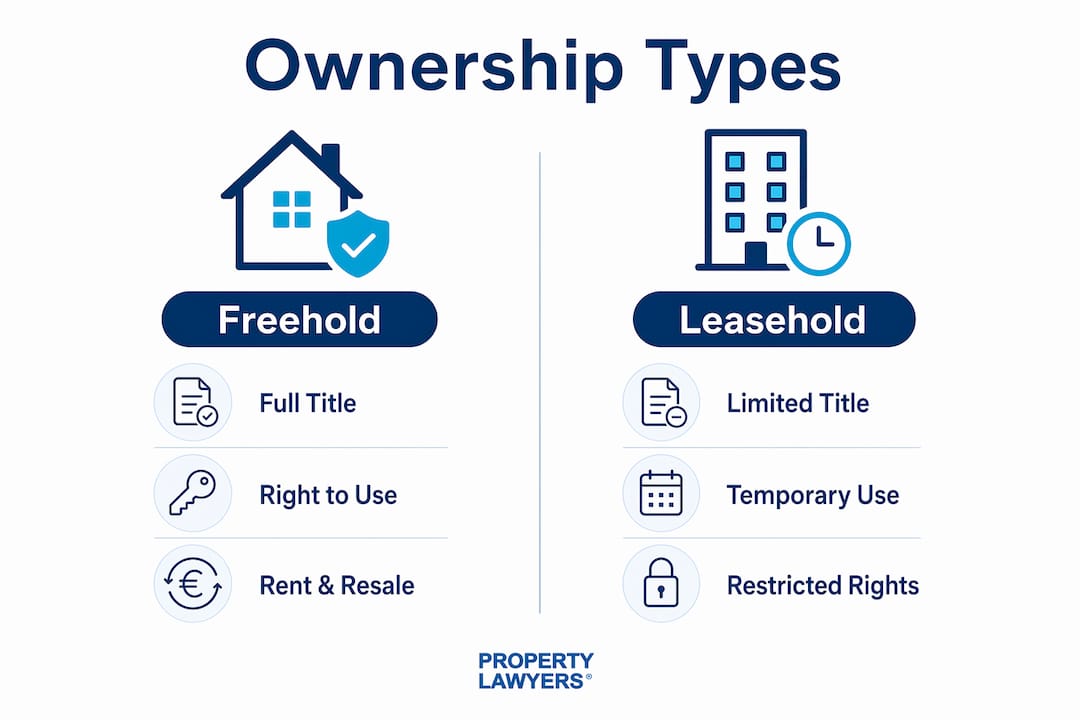
Freehold and leasehold ownership in Spain are defined by entirely different legal rights, and understanding what is leasehold versus freehold for Spain buyers is the single most important step before signing any contract. Freehold, known in Spanish law as pleno dominio, gives you outright ownership of both the building and the land beneath it, with no time limit and no conditions attached. Leasehold, by contrast, grants a time-limited right to use a property rather than own it outright. Spain’s residential market is dominated by freehold sales, but leasehold arrangements do exist, particularly in commercial contexts, and the legal distinctions carry real consequences for your investment, your tax position, and your long-term plans.
What is leasehold versus freehold for Spain buyers?
The vast majority of residential property in Spain is sold as freehold. When you buy a home in Marbella, Mallorca, or Barcelona on a freehold basis, you acquire pleno dominio: full, permanent ownership of the property and the land it sits on. There is no landlord above you, no lease to renew, and no expiry date on your rights. Non-residents can purchase and hold freehold property in Spain indefinitely, with the same ownership rights as Spanish nationals.
Leasehold, in the way British buyers typically understand it, is largely absent from the Spanish residential market. Spain does not operate a system where developers sell flats on 99-year or 125-year leases while retaining the freehold of the land. That structure is specific to English and Welsh property law and has no direct equivalent in Spain. When Spanish lawyers or agents use the word “leasehold,” they are usually referring either to a rental tenancy or to a commercial business transfer known as a traspaso.
Spanish property law does, however, recognise a concept that functions similarly to a split ownership structure. This is the division between nuda propiedad (bare ownership) and usufructo (the right to use and enjoy the property). Spanish law divides ownership into these two distinct legal interests, and understanding the difference matters enormously if you encounter either term in a property listing or contract.
How leasehold and freehold ownership work under Spanish law
Pleno dominio is the default ownership type for residential property sales in Spain. It combines both the bare title and the right of use into a single, unified interest. When you buy a flat in Valencia or a villa in Ibiza as pleno dominio, you hold every legal right over that property from the moment of completion.
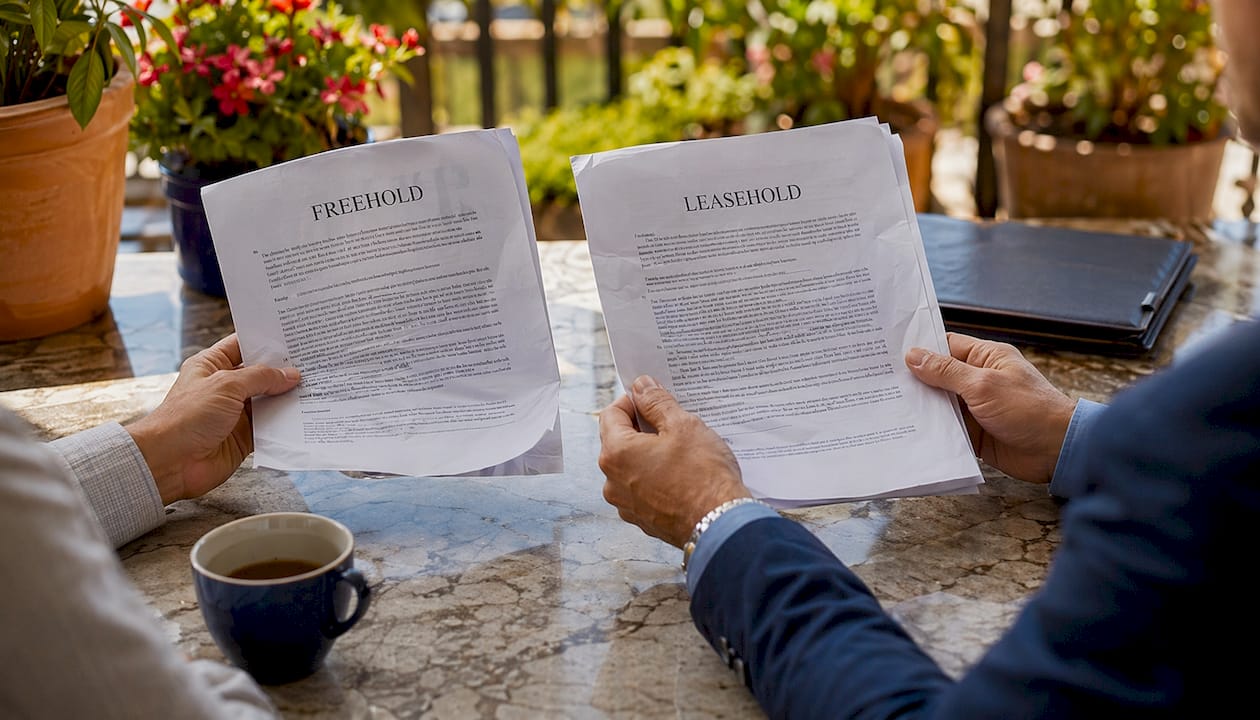
The more complex situation arises with nuda propiedad and usufruct arrangements. Under Spanish law, these two interests can be held by different people simultaneously. The bare owner holds the legal title to the property but cannot live in it, rent it out, or derive income from it while the usufruct is in force. The usufructuary, by contrast, has the right to occupy the property and collect any rental income, but does not hold the underlying title.
This arrangement is most common in inheritance planning. A parent may leave a property to their children as bare owners while retaining the usufruct for their own lifetime. The children own the title on paper but cannot use or sell the property freely until the usufruct ends, typically upon the usufructuary’s death or at the end of a fixed term. At that point, full pleno dominio consolidates automatically in the bare owner’s hands.
The tax responsibilities in a usufruct arrangement are also split. The bare owner pays property taxes such as the IBI (Impuesto sobre Bienes Inmuebles), while the usufructuary covers costs related to use, including utilities and community fees. The usufructuary also collects any rental income during the period of the usufruct. This division of rights and costs is a critical detail that buyers must understand before purchasing a property with an existing usufruct registered against it.
Pro Tip: If a property listing shows a price that seems unusually low, check whether it is being sold as nuda propiedad with an active usufruct attached. You may be buying a title you cannot use for years.
Under the Ley de Arrendamientos Urbanos (LAU), Spain’s urban tenancy law, residential tenants hold a minimum 5-year right to remain in a property (7 years if the landlord is a company). This is a tenancy right, not an ownership right, and it reinforces why leasehold tenure in the English sense simply does not exist in the Spanish residential market.
Common misconceptions about leasehold properties in Spain
The biggest misconception international buyers bring to Spain is the assumption that leasehold works the same way it does in the UK. It does not. Most Spanish residential properties are freehold with pleno dominio, and the leasehold structures familiar to British buyers have no equivalent in Spanish residential law.
Where leasehold thinking does apply in Spain is in the commercial sector, specifically through the traspaso. A traspaso is the transfer of a business lease and its associated operations, not a transfer of property ownership. If you buy a bar or a restaurant in Málaga through a traspaso, you are acquiring the right to operate from those premises under an existing lease, along with the business assets, goodwill, and fixtures. You do not own the building.
The risks in a traspaso are significant and often underestimated. Landlords can increase rent by 20% on a business transfer, and the original lease may have only a short term remaining. A buyer who pays a substantial sum for a traspaso and then finds the landlord will not renew the lease is in a very difficult position. The key risks to understand before any commercial leasehold purchase are:
- Remaining lease term. Check how many years are left on the existing lease. A term of fewer than five years is generally too short to justify a significant traspaso payment.
- Rent review rights. Confirm what the landlord can charge on transfer and at each renewal. A 20% increase at transfer can materially affect business viability.
- Renewal options. Establish whether the lease includes an option to renew and on what terms. Without this, the landlord controls your future.
- Landlord consent. Most commercial leases require landlord consent to any transfer. Confirm this consent is in place before paying any deposit.
- New lease negotiation. Commercial buyers are strongly advised to negotiate a fresh lease directly with the landlord rather than relying solely on the transferred lease.
The Nota Simple from the Land Registry is the document that confirms ownership status for any property in Spain. Buyers who skip this check risk purchasing a property with registered encumbrances, usufruct rights, or other restrictions they were never told about.
How to verify freehold or leasehold status before buying in Spain
Verifying ownership type before you commit to a purchase is non-negotiable. The Nota Simple from the Land Registry is the authoritative document for this purpose. It shows the registered owner, the nature of the ownership interest, and any encumbrances, charges, or usufruct rights attached to the property. Every buyer should obtain a Nota Simple before signing any preliminary contract.
The key things to look for in a Nota Simple are:
- Pleno dominio. This confirms full freehold ownership with no restrictions on use or transfer.
- Nuda propiedad. This indicates the property is being sold as bare ownership only, with an active usufruct held by another party.
- Usufructo. This shows who holds the right of use, for how long, and under what conditions.
- Cargas y gravámenes. This section lists mortgages, charges, and other encumbrances. A usufruct registered here affects your ability to use or sell the property.
- Anotaciones preventivas. These are preventive annotations, often indicating ongoing legal disputes or embargo orders.
Your Spanish property lawyer will interpret the Nota Simple and advise on any issues it reveals. This is not a document to read alone without legal support. A specialist in Spanish property due diligence will also check for unpaid community fees, planning restrictions, and any discrepancies between the registered description and the physical property.
For commercial purchases involving a traspaso, the verification process is different. There is no land registry entry for a business lease transfer. Instead, your lawyer must review the original lease agreement, any addenda, the landlord’s consent to transfer, and the terms of any proposed new lease. This requires a different set of legal skills from residential conveyancing.
Pro Tip: Always request a Nota Simple dated within the last 30 days. Older copies may not reflect recent charges, usufruct registrations, or legal proceedings that could affect your purchase.
Investment and lifestyle implications of freehold versus leasehold in Spain
Freehold property in Spain offers the strongest foundation for both lifestyle and investment. Freehold properties achieve higher resale values and give the owner complete control over the asset, including the right to rent it out, renovate it, or sell it at any time. For buyers seeking a holiday home in Ibiza, a rental investment in Málaga, or a permanent residence in Barcelona, freehold is the appropriate and standard ownership structure.
Usufruct arrangements create a more complicated picture for buyers. If you purchase a property as bare owner with an active usufruct, you hold the title but cannot live there, cannot rent it out, and cannot benefit financially from the property until the usufruct ends. The usufructuary retains all rights of occupation and income. This structure can make sense in specific inheritance or family planning scenarios, but it is rarely the right choice for an international buyer seeking immediate use of a Spanish property.
The tax position also differs between the two interests. The bare owner carries the IBI liability and other property taxes without receiving any benefit from the property. The usufructuary enjoys the property but holds no permanent ownership stake. This split creates practical complications, particularly when one party wants to sell or refinance.
For buyers considering commercial property or a business acquisition through a traspaso, the investment calculus is different again. The value of a traspaso depends entirely on the quality and duration of the underlying lease. A well-located restaurant with a 10-year lease and a reasonable rent is a viable investment. The same business with three years remaining on the lease and a landlord who has signalled rent increases is a much riskier proposition.
Pro Tip: If your goal is rental income, always buy freehold. Usufruct arrangements and commercial leases both restrict your ability to generate and retain rental income freely.
The table below summarises the key differences between the main ownership types you will encounter in Spain.
| Ownership type | Who holds the title | Right to use | Right to rent | Resale freedom | Typical context |
|---|---|---|---|---|---|
| Pleno dominio (freehold) | Buyer | Yes | Yes | Full | Residential and commercial |
| Nuda propiedad (bare ownership) | Buyer | No (until usufruct ends) | No (until usufruct ends) | Restricted | Inheritance planning |
| Usufructo | Usufructuary (not buyer) | Yes | Yes | No | Lifetime or fixed-term arrangements |
| Traspaso (commercial lease transfer) | Landlord retains freehold | Yes (via lease) | Subject to lease terms | No (lease only) | Commercial business transfers |
Key takeaways
Freehold ownership, or pleno dominio, is the correct and standard structure for international buyers purchasing residential property in Spain, offering full title, unrestricted use, and the strongest resale position.
| Point | Details |
|---|---|
| Freehold is the norm | Most Spanish residential sales are pleno dominio, giving buyers full and permanent ownership of land and building. |
| Leasehold is rare in residential sales | Spain has no equivalent to the English leasehold system for residential flats or houses. |
| Usufruct splits title from use | Bare ownership and usufruct can be held separately, affecting tax, income, and occupancy rights. |
| Traspaso is a commercial concept | Buying a business lease in Spain transfers operating rights, not property ownership. |
| Always check the Nota Simple | The Land Registry document confirms ownership type and reveals any usufruct or encumbrances before you commit. |
What I have learned from watching buyers get this wrong
Working with international buyers across Spain, I have seen the same misunderstanding repeat itself more than any other. Buyers arrive with a mental model built on English property law and assume that anything described as “leasehold” in Spain carries the same risks and structures they know from home. It does not, and that assumption leads to two very different kinds of error.
The first error is unnecessary alarm. Buyers sometimes walk away from perfectly sound freehold purchases because an agent or listing used the word “leasehold” loosely to describe a rental tenancy or a usufruct arrangement. With a proper legal check before purchase, these situations are straightforward to assess and often present no real obstacle.
The second error is the more dangerous one. Buyers who assume that all Spanish property is freehold skip the verification step entirely. They do not request a Nota Simple, they do not ask their lawyer to check for registered usufruct rights, and they complete a purchase only to discover that the previous owner’s surviving spouse holds a lifetime right to live in the property. That is a situation I have seen cause genuine distress, and it is entirely avoidable.
My recommendation is consistent: treat the Nota Simple as mandatory, not optional. Treat any mention of usufruct as a flag requiring full legal explanation before you proceed. And if you are buying a commercial business through a traspaso, negotiate a new lease directly with the landlord rather than relying on the transferred lease alone. The cost of proper legal advice at the outset is a fraction of the cost of resolving a dispute after completion.
— Sophie
How Property-lawyers can help you buy with confidence in Spain
Understanding ownership structures in Spain is one thing. Verifying them correctly before you commit to a purchase is another matter entirely. Property-lawyers connects international buyers with trusted, independent Spanish property lawyers who specialise in exactly this kind of due diligence.
Whether you are buying a freehold villa in Marbella, assessing a property with a usufruct registered against it, or considering a commercial traspaso in Málaga, the right legal support makes the difference between a sound investment and a costly mistake. Property-lawyers’ network of English-speaking solicitors covers every region of Spain and provides registry checks, contract review, and full 2026 property law guidance tailored to your specific purchase. Contact Property-lawyers today to find a specialist lawyer who understands your situation and your goals.
FAQ
What does freehold mean when buying property in Spain?
Freehold in Spain is called pleno dominio and means you own the property and the land outright, permanently, with no lease or time limit attached.
Is leasehold property common in Spain?
Leasehold in the English sense is not common in Spanish residential property. Most homes are sold as freehold, and leasehold arrangements are largely limited to commercial business transfers known as traspasos.
What is a usufruct and how does it affect buyers?
A usufruct gives one person the right to use and enjoy a property while another person holds the bare legal title. The bare owner cannot use or rent the property until the usufruct ends, which affects both income and occupancy rights.
How do I check whether a Spanish property is freehold or leasehold?
Request a Nota Simple from the Spanish Land Registry. This document confirms the ownership type, identifies any usufruct rights, and lists all charges or encumbrances registered against the property.
What is a traspaso and is it the same as buying leasehold?
A traspaso is the transfer of a commercial business lease and its operations, not a transfer of property ownership. The landlord retains the freehold, and the buyer acquires only the right to operate from the premises under the existing or renegotiated lease terms.
Recommended
- Freehold property in Spain explained for international buyers
- Property law in Spain: a 2026 guide for buyers
- Spanish real estate law: a buyer’s guide for 2026
- Property Purchase Tax in Spain — What Buyers Must Pay | Property Lawyers

Sophie Gutenberg is a legal content specialist focused on Spanish property law, real estate transactions, conveyancing, due diligence and tax issues affecting international property buyers in Spain. She works alongside qualified Spanish property lawyers .
